My Lab

Games > Backrooms: Escape Together

Backrooms: Escape Together cover art Now scanning App #2141730

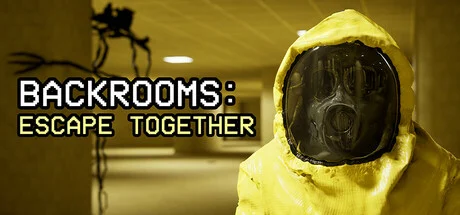
Backrooms: Escape Together

  • Action, Adventure, Casual
  • Oct 18, 2022
  • Triiodide Studios
  • On PC (Windows), PlayStation 5, Xbox Series X|S
How it plays9 core moves

Backrooms: Escape Together is an atmospheric co-op horror game where groups of players explore procedurally generated liminal spaces while evading terrifying entities. It emphasizes tension, proximity voice chat, and survival exploration with friends.

Steam reviews18,481Very Positive
Median playtime4.4 hper owner
Steam price$9.99US store
Steam players90%recommend it
DNA confidence83%48 of 48 mechanics scored

Your call

Personal, from your Lab
?

Tell the Lab which mechanics you love and which you avoid. This box then makes a Play or Dodge call for you on every game.

    Set up My Lab
    Compare with another game
    Does this scan match the game?
    One score looks wrong?

    Move list

    Depth 0-10 / Grind 1-10
    Horror & Tension: depth 9 of 10, grind 2 of 10.

    Atmospheric psychological survival horror relies heavily on dread, creepy sounds, and proximity chat.

    Co-op PvE: depth 8 of 10, grind 2 of 10.

    Designed around cooperative online play for up to 6 players navigating horror levels together.

    Procedural Generation: depth 7 of 10, grind 2 of 10.

    The game features 11 procedurally generated levels with randomized layout elements.

    Environmental Storytelling: depth 6 of 10, grind 2 of 10.

    Atmospheric levels feature detailed grime, graffiti, and a creepy liminal vibe.

    Time Pressure: depth 5 of 10, grind 4 of 10.

    Tension and panic arise when entities start chasing players in real time.

    Open-World Exploration: depth 4 of 10, grind 2 of 10.

    Players explore multiple procedurally generated levels and environments.

    Precision & Skill Difficulty: depth 4 of 10, grind 3 of 10.

    Players must successfully evade and run from hostile entities during tense moments.

    Puzzle Solving: depth 4 of 10, grind 3 of 10.

    Players solve simple puzzles and open doors using collected items like coins.

    Roguelike Runs

    Low confidence
    Roguelike Runs: depth 4 of 10, grind 4 of 10.

    Runs feature randomized elements and procedural layouts across distinct levels.

    Also in the game13 lighter systems

    Social & Roleplay

    Secondary system
    Social & Roleplay: depth 3 of 10, grind 1 of 10.

    In-game proximity voice chat enhances social interaction among friends.

    Stealth

    Secondary system
    Stealth: depth 3 of 10, grind 2 of 10.

    Players must hide and avoid detection from hostile entities stalking the halls.

    Build Customization: depth 2 of 10, grind 1 of 10.

    Limited character customization options are available.

    Platforming

    Barely there
    Platforming: depth 2 of 10, grind 1 of 10.

    Basic movement involves navigating the 3D environments.

    Story-Driven

    Barely there
    Story-Driven: depth 2 of 10, grind 1 of 10.

    Progression involves moving deeper into the Backrooms without heavy cinematic plot.

    Lore Depth

    Barely there
    Lore Depth: depth 2 of 10, grind 1 of 10.

    Atmosphere draws on popular internet Backrooms lore concepts.

    Resource Gathering

    Barely there
    Resource Gathering: depth 2 of 10, grind 3 of 10.

    Players use available items found in the environment.

    Survival Needs

    Barely there
    Survival Needs: depth 2 of 10, grind 2 of 10.

    Survival elements focus on evading danger rather than managing deep meters.

    Immersive-Sim Reactivity: depth 2 of 10, grind 1 of 10.

    World reacts to player noise and proximity, affecting monster behavior.

    Boss Encounters

    Barely there
    Boss Encounters: depth 1 of 10, grind 1 of 10.

    Entities chase and hunt players across levels.

    Sandbox Creativity

    Barely there
    Sandbox Creativity: depth 1 of 10, grind 1 of 10.

    Customization options exist for characters.

    Loot & Itemization

    Barely there
    Loot & Itemization: depth 1 of 10, grind 1 of 10.

    Limited variety of items appears as loot for door unlocking.

    Mod Ecosystem

    Barely there
    Mod Ecosystem: depth 1 of 10, grind 1 of 10.

    Community mods enable VR support and other enhancements.

    DNA scanTop 8
    Horror &TensionCo-op PvEProceduralGenerationEnvironmentalStorytellingTime PressureOpen-WorldExplorationPrecision &SkillDifficultyPuzzle Solving
    DepthGrind

    Play it or dodge it?

    Built from the scan

    Backrooms: Escape Together is built around horror & tension (9/10), co-op PvE (8/10) and procedural generation (7/10). It asks for little grind: its systems average 2.5/10. It has no melee combat, skill trees & progression and gunplay.

    Play it if

    • You want deep horror & tension (9/10)
    • You want deep co-op PvE (8/10)
    • You want depth without much grind (its heaviest system asks 4/10)

    Dodge it if

    • You want melee combat: it has none
    • You want skill trees & progression: it has none
    • You want gunplay: it has none

    Not sure what you like? Take the 1-minute Gamer DNA Test

    Quick answers

    Built from the scan above

    What do you actually do in Backrooms: Escape Together?

    Its deepest systems are horror & tension (9/10), co-op PvE (8/10) and procedural generation (7/10).

    Who should play Backrooms: Escape Together?

    Play Backrooms: Escape Together if you want deep horror & tension (9/10); you want deep co-op PvE (8/10); or you want depth without much grind (its heaviest system asks 4/10).

    Who should skip Backrooms: Escape Together?

    Skip Backrooms: Escape Together if you want melee combat: it has none; you want skill trees & progression: it has none; or you want gunplay: it has none.

    Is Backrooms: Escape Together grindy?

    Moderately. The most repetitive part is time pressure, at 4/10 for grind.

    What does Backrooms: Escape Together not have?

    It has no melee combat, skill trees & progression, gunplay, competitive PvP, economy & trading and crafting. It only touches on build customization (2/10), story-driven (2/10), lore depth (2/10), boss encounters (1/10), loot & itemization (1/10) and resource gathering (2/10).

    Is Backrooms: Escape Together single-player or multiplayer?

    Steam lists these modes: Single-player, Multi-player, Co-op and Online Co-op.

    What PC do you need to run Backrooms: Escape Together?

    The minimum listed on Steam is: Processor: Intel Core i5-4430; Memory: 4 GB RAM; Graphics: NVIDIA GeForce GTX 960 2GB / AMD Radeon R7 370 2GB; Storage: 15 GB available space.

    How much does Backrooms: Escape Together cost?

    It is listed at $9.99 on the US Steam store, checked 25 November 2026.

    Player takes

    0 so far

    No takes yet. Be the first.

    Best price

    US prices, checked 25 Nov 2026
    1. Steam $9.99 Go to store: Backrooms: Escape Together on Steam

    Lowest ever seen: $3.99 Price data from IsThereAnyDeal. Prices change often; the store page has the final one.

    PC specs

    As listed on Steam

    Minimum

    • Requires a 64-bit processor and operating system
    • OS: Windows 10 64-bit version 1909 revision .1350
    • Processor: Intel Core i5-4430
    • Memory: 4 GB RAM
    • Graphics: NVIDIA GeForce GTX 960 2GB / AMD Radeon R7 370 2GB
    • DirectX: Version 11
    • Storage: 15 GB available space
    • Additional Notes: Latest drivers for AMD and NVIDIA GPUs are required. If on AMD, you must be on the latest OPTIONAL drivers.

    Recommended

    • Requires a 64-bit processor and operating system
    • OS: 64-bit Windows 11 (Latest Feature Update)
    • Processor: Intel Core i5-6600K / AMD Ryzen 5 1600
    • Memory: 16 GB RAM
    • Graphics: NVIDIA GeForce RTX 2070 8GB / Radeon RX 6600 XT
    • DirectX: Version 12
    • Network: Broadband Internet connection
    • Storage: 15 GB available space

    About this data

    Verified 25 Nov 2026

    Store details, review counts and requirements come from Steam. Community tag votes come from SteamSpy, and themes and modes from IGDB. Depth and grind scores are produced by two separate language models reading that material, then reconciled and capped against community tags. A score the two models disagree on is marked low confidence.

    How scoring works