Resource Gathering: depth 9 of 10, grind 8 of 10.
Mining ores, chopping wood, and collecting cavern materials are core gameplay loops.
Games > Core Keeper
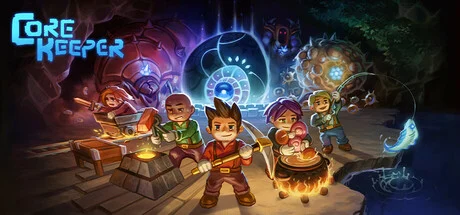 Now scanning App #1621690
Core Keeper is an isometric top-down survival crafting game set in a massive procedurally generated underground cavern system. Players can mine resources, build elaborate bases, automate production with conveyor belts, farm, and battle challenging bosses either solo or in cooperative multiplayer.
Tell the Lab which mechanics you love and which you avoid. This box then makes a Play or Dodge call for you on every game.
Mining ores, chopping wood, and collecting cavern materials are core gameplay loops.
The game features a massive, sprawling underground cavern world divided into distinct biomes.
The entire game supports seamless online co-op for up to 8 players to mine, build, and fight together.
Extensive block placement and building tools allow for highly creative architectural projects.
Progress requires defeating major biome bosses, including various giant slimes and ancient creatures.
Players construct extensive underground bases with rooms, walls, lighting, and specialized facilities.
A robust crafting system allows players to create armor, weapons, tools, and utility stations.
World maps and cavern biomes are procedurally generated upon starting a new game.
Performing specific actions like mining or combat increases skill levels and unlocks passive perks.
Late-game boss fights and biomes feature high damage spikes requiring precise dodging and positioning.
Players engage in close-quarters combat using a variety of swords and melee weapons against cavern monsters and bosses.
Players utilize ranged bows, firearms, and magic staffs with various spell projectiles to attack from a distance.
Conveyor belts and automated systems allow players to streamline resource production and farming.
Players customize their playstyle by mixing armor sets, accessories, and pseudo-class equipment.
Exploration and bosses yield various weapons, armor pieces, and accessories with differing rarity tiers.
Lore is uncovered by exploring ancient ruins, reading tablets, and discovering remnants of a lost civilization.
Codex entries, statues, and mysterious ruins flesh out the backstory of the subterranean world.
Cooking and consuming food provides essential stat buffs and health recovery during exploration.
Players can plant seeds, water crops, and harvest plants to cook food or gather materials.
The game supports community mods primarily focused on quality-of-life enhancements.
Exploring dark, claustrophobic underground tunnels creates a tense and atmospheric vibe.
Players pursue the central mystery of the ancient Core and the underground world.
Players can buy and sell items with specialized NPC vendors who move into player bases.
Certain merchants can be attracted to move into built housing, but there are no complex colony management mechanics.
Players craft pre-made vehicles like boats and minecarts rather than building custom vehicles from parts.
Dungeons occasionally feature simple switch or key-based puzzles to unlock reward rooms.
Movement is mostly top-down with occasional gaps to jump or bridge across.
There is no ticking clock or day/night cycle enforcing strict time pressure.
Mounts and vehicles like boats provide basic directional movement without complex driving physics.
Boats and go-karts can be used for travel, though vehicle combat is virtually non-existent.
Certain ranged weapons use bullets and projectiles, though firearms are limited compared to standard ranged combat.
Tamed animals and pets follow the player around, though their utility in combat is limited.
Stealth elements exist only as very minor baseline mechanics without dedicated systems.
NPCs offer simple text dialogue interactions when establishing a base.
The world features basic interactive elements like water lighting and digging, but lacks deep simulation reactivity.
The game features an atmospheric soundtrack but no rhythm-based gameplay.
The overarching narrative follows a fixed path without major story branches.
Base defenses like traps and automated turrets can be set up to repel invading monsters.
Players can build homes together and interact in multiplayer sessions using emotes and chat.
Core Keeper is built around resource gathering (9/10), open-world exploration (9/10) and co-op PvE (9/10). Grind is moderate, averaging 5.5/10 across its systems. If you liked Enshrouded and V Rising, it plays close (85% match on mechanics). It has no competitive PvP, metroidvania navigation and roguelike runs.
Its deepest systems are resource gathering (9/10), open-world exploration (9/10) and co-op PvE (9/10).
Play Core Keeper if you want deep resource gathering (9/10); you want deep open-world exploration (9/10); or you play with friends (co-op).
Skip Core Keeper if you hate grind: resource gathering asks 8/10; you want competitive PvP: it has none; or you want metroidvania navigation: it has none.
Yes, in places. Resource Gathering scores 8/10 for grind, the highest in the game.
It has no competitive PvP, roguelike runs, permadeath, turn-based tactics, city management and real-time strategy. It only touches on gunplay (2/10), time pressure (2/10), stealth (1/10), puzzle solving (2/10), party & companions (2/10) and platforming (2/10).
By shared mechanics rather than genre, the closest matches are Enshrouded (85% match), V Rising (85% match) and Conan Exiles Enhanced (85% match).
Steam lists these modes: Single-player, Multi-player, Co-op and Online Co-op.
The minimum listed on Steam is: Processor: Intel Core i5-2300 / AMD Ryzen 3 1200; Memory: 8 GB RAM; Graphics: GeForce GTX 460 / Radeon HD 5850.
It is listed at $19.99 on the US Steam store, checked 24 November 2026.
No takes yet. Be the first.
Also checkKinguin
Lowest ever seen: $7.12 Price data from IsThereAnyDeal. Prices change often; the store page has the final one.
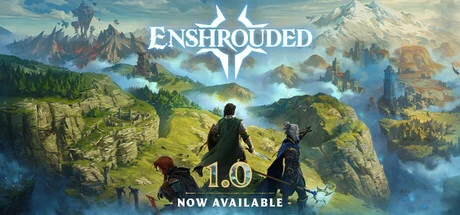 85% match
 85% match
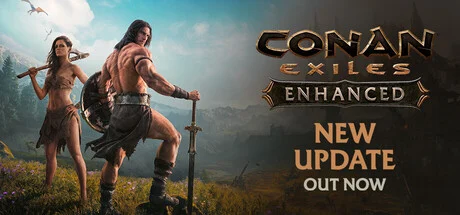 85% match
 84% match
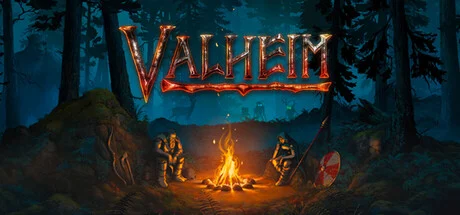 84% match
 82% match
 81% match
 80% match
Store details, review counts and requirements come from Steam. Community tag votes come from SteamSpy, and themes and modes from IGDB. Depth and grind scores are produced by two separate language models reading that material, then reconciled and capped against community tags. A score the two models disagree on is marked low confidence.