Boss Encounters: depth 9 of 10, grind 2 of 10.
Intense, frequent boss battles dominate every level.
Games > Cuphead
 Now scanning App #268910
Cuphead is a fast‑paced 2D run‑and‑gun platformer where players dodge bullet patterns and fight elaborate bosses. It offers tight co‑op play and demanding precision.
Tell the Lab which mechanics you love and which you avoid. This box then makes a Play or Dodge call for you on every game.
Intense, frequent boss battles dominate every level.
Success hinges on precise timing and reflexes against tight bullet patterns.
Continuous shooting while moving forms the core combat loop.
Side‑scroll platform movement with jumps and dashes drives the action.
Players attack enemies using various special charms, projectile types, and EX moves.
Local co‑op lets two players share the same run‑and‑gun experience.
Levels and boss encounters proceed at a relentless, fast-paced rhythm.
Players equip different weapons, charms, and super abilities from a shop before battles.
Players navigate a small overworld map to access different levels.
The original jazz soundtrack strongly matches the visual tempo and action.
The 1930s cartoon aesthetic and background details establish the world.
Surreal and difficult bosses create intense player stress.
A simple premise involves making a deal with the devil.
Minimal backstory is provided through introductory text and NPC chats.
NPCs can be interacted with for brief linear dialogue.
Community texture and aesthetic mods exist on PC platforms.
Local co-op allows a second player to join as Mugman.
Cuphead is built around relentless boss encounters rated at depth 9 and strict precision and skill difficulty rated at depth 9. You spend your time dodging intense bullet patterns, shooting continuously, and timing every jump and dash across fast-paced stages. The grind sits very low at a score of 1 or 2 across its systems, meaning progress relies purely on learning attack patterns and sharpening your personal reflexes rather than grinding for stats or gear. You can also mix up your loadout using light build customization rated at depth 3, and bring a friend along via local co-op. If you prefer slow exploration, relaxed pacing, or games that let you out-level difficult encounters through passive progression, you will bounce off this strict skill check immediately.
Its deepest systems are boss encounters (9/10), precision & skill difficulty (9/10) and gunplay (7/10).
Play Cuphead if you want intense boss fights that test pure reflexes; you enjoy mastering difficult 2D platforming; or you prefer skill-based wins over stat grinding.
Skip Cuphead if you hate repeating bosses to memorize patterns; you get easily frustrated by precision jumps; or you prefer relaxed pacing and easy exploration.
Not much. Its highest grind score is 2/10, for boss encounters.
It has no melee combat, skill trees & progression, loot & itemization, resource gathering, competitive PvP and economy & trading. It only touches on environmental storytelling (2/10), story-driven (2/10), lore depth (2/10), mod ecosystem (1/10), horror & tension (2/10) and party & companions (1/10).
By shared mechanics rather than genre, the closest matches are DOOM Eternal (81% match), Killing Floor (77% match) and DOOM (76% match).
Steam lists these modes: Single-player, Multi-player, Co-op, Shared/Split Screen Co-op and Shared/Split Screen.
The minimum listed on Steam is: Processor: Intel Core2 Duo E8400, 3.0GHz or AMD Athlon 64 X2 6000+, 3.0GHz or higher; Memory: 3 GB RAM; Graphics: Geforce 9600 GT or AMD HD 3870 512MB or higher; Storage: 4 GB available space.
It is listed at $19.99 on the US Steam store, checked 19 November 2026.
No takes yet. Be the first.
Also checkKinguin
Lowest ever seen: $11.99 Price data from IsThereAnyDeal. Prices change often; the store page has the final one.
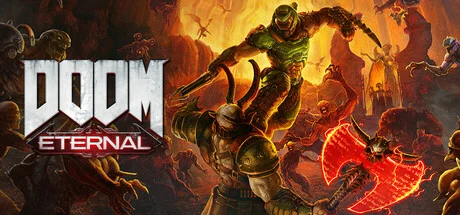 81% match
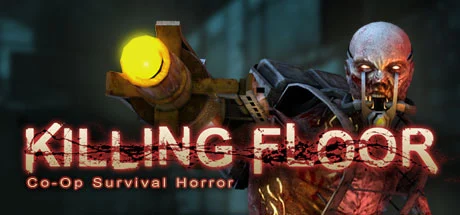 77% match
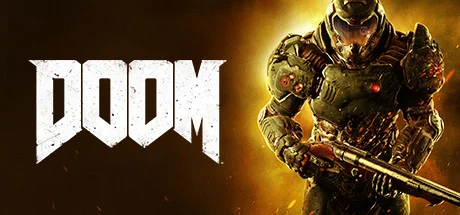 76% match
 75% match
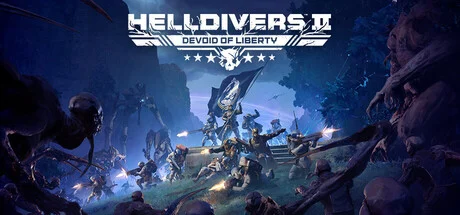 75% match
 74% match
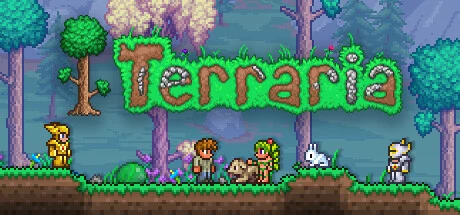 74% match
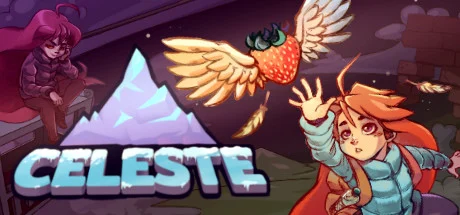 72% match
Store details, review counts and requirements come from Steam. Community tag votes come from SteamSpy, and themes and modes from IGDB. Depth and grind scores are produced by two separate language models reading that material, then reconciled and capped against community tags. A score the two models disagree on is marked low confidence.