Survival Needs: depth 9 of 10, grind 8 of 10.
Players must constantly monitor and manage hunger, health, and sanity meters to avoid sudden death in the wilderness.
Games > Don't Starve
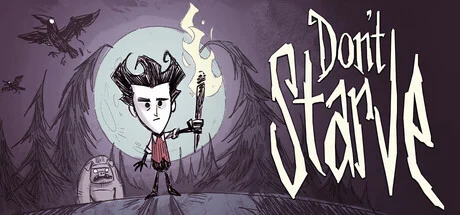 Now scanning App #219740
Don't Starve is an unforgiving wilderness survival game centered around resource gathering, crafting, and managing vital survival meters. Players explore a hand-drawn open world while dealing with permadeath, harsh day-night cycles, and hostile creatures.
Tell the Lab which mechanics you love and which you avoid. This box then makes a Play or Dodge call for you on every game.
Players must constantly monitor and manage hunger, health, and sanity meters to avoid sudden death in the wilderness.
Dying forces the player back to zero on a fresh save file with no lasting progression except personal knowledge.
Gathered resources are used to craft tools, items, and structures necessary for surviving hostile days and nights.
Survival relies on spending time running around the map chopping trees, mining nodes, and collecting basic materials.
Players freely combine resources to craft structures, items, and survive.
Players wander across a mysterious procedurally populated map to discover new biomes, creatures, and caves.
Each death restarts the world, making the game a loop of repeatable survival runs.
The game features major boss creatures like Deerclops that require dedicated preparation.
Day/night cycles impose survival deadlines for food and shelter.
Dark environments and hostile creatures create constant tension.
Each new game generates a fresh map with random biomes and resources.
The world contains ambient, cryptic history and clues for players who wish to engage with its mysterious lore.
World reacts to player actions—fire lights, attracts monsters, changes behavior.
Combat timing and positioning demand precise player skill.
Players plant seeds, tend crops, and manage seasonal farming to sustain themselves.
Players constantly fight creatures with melee weapons, making combat a core recurring activity.
Steam Workshop supports extensive community mods and content.
Players can build campfires, science machines and other structures to survive.
Collectible notes and artifacts reveal world backstory.
Spells and ranged magical staffs exist but are limited and optional.
Occasional trading with NPCs such as the Pig King provides limited barter.
Simple environmental puzzles unlock structures or progress.
Minimal narrative is delivered through optional lore items.
Structures can be built and placed, though options are fixed to preset designs.
A wide variety of items and gear drop from enemies and chests, influencing playstyle.
Choosing a character at start presents minor dialogue options.
Occasional jumps are required but are not a focus.
Biomes interconnect, allowing free exploration without locked doors.
Don't Starve is an unforgiving wilderness survival game defined by its demanding Survival Needs sitting at a depth of 9 and a heavy grind of 8, where you constantly monitor hunger, health, and sanity meters. Alongside this, the Permadeath system sits at depth 9 and grind 7, wiping all progress upon death and forcing a complete restart. The Crafting system sits at depth 8 and grind 6, requiring you to gather resources like wood and stone to build essential tools and structures. You will bounce off this experience if you dislike losing hours of progress to a single mistake or find relentless resource gathering and meter management tedious. If you enjoy harsh isolation, strict time pressure, and figuring out hostile biomes through trial and error, this loop offers a stark challenge.
Its deepest systems are survival needs (9/10), permadeath (9/10) and crafting (8/10).
Play Don't Starve if you want survival meters that test every move; you like starting fresh with hard-earned knowledge; or you enjoy exploring hostile procedural biomes.
Skip Don't Starve if you hate losing all progress upon sudden death; you dislike constant resource gathering grinds; or you want relaxed progression without food stress.
Yes, in places. Survival Needs scores 8/10 for grind, the highest in the game.
It has no skill trees & progression, co-op PvE, gunplay, competitive PvP, party & companions and stealth. It only touches on build customization (2/10), story-driven (2/10), loot & itemization (2/10), economy & trading (2/10), platforming (1/10) and magic & ranged abilities (2/10).
By shared mechanics rather than genre, the closest matches are Raft (84% match), Don't Starve Together (83% match) and Project Zomboid (82% match).
Steam lists these modes: Single-player.
The minimum listed on Steam is: Processor:1.7+ GHz or better; Memory:1+ gigs of RAM GB RAM; Graphics:Radeon HD5450 or better.
It is listed at $9.99 on the US Steam store, checked 19 November 2026.
No takes yet. Be the first.
Also checkKinguin
Lowest ever seen: $2.49 Price data from IsThereAnyDeal. Prices change often; the store page has the final one.
 84% match
 83% match
 82% match
 82% match
 79% match
 78% match
 78% match
 78% match
Store details, review counts and requirements come from Steam. Community tag votes come from SteamSpy, and themes and modes from IGDB. Depth and grind scores are produced by two separate language models reading that material, then reconciled and capped against community tags. A score the two models disagree on is marked low confidence.