Melee Combat: depth 8 of 10, grind 4 of 10.
First‑person melee fights feel heavy and rewarding, especially after weapon upgrades.
Games > Dying Light
 Now scanning App #239140
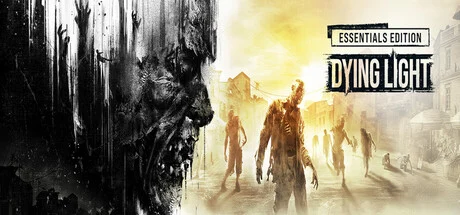
Dying Light blends fluid parkour movement with brutal melee and crafting in a sprawling, day‑night‑driven zombie world. Exploration, scavenging, and vehicle play add depth to the survival experience.
Tell the Lab which mechanics you love and which you avoid. This box then makes a Play or Dodge call for you on every game.
First‑person melee fights feel heavy and rewarding, especially after weapon upgrades.
The city of Harran is a large open map to roam, climb, and discover.
Fluid first-person parkour mechanics govern rooftop traversal, precision jumps, and urban escape routes.
The dynamic day-night cycle forces players to scramble back to safety before darkness spawns deadly hunters.
A campaign arc follows an undercover operative navigating factions and a viral epidemic in Harran.
The dynamic day and night cycle introduces intense atmospheric survival dread when aggressive volatiles hunt players in the dark.
Weapons and tools can be crafted and upgraded from gathered parts.
Scavenging yields tiered weapons, crafting components, and blueprints with various modifications.
The ruined city of Harran conveys the outbreak's horrors through abandoned encampments and scattered notes.
Nighttime survival requires precise parkour timing and combat reflexes to evade lethal Volatiles.
An RPG progression system allows players to unlock new abilities, upgrades, and parkour moves over time.
Players can team up online to tackle missions, share gear, and survive the infected hordes together.
Sneaking past dangerous night-time volatile zombies and executing silent takedowns form a core survival layer.
Players unlock active and passive abilities across agility, power, and survivor skill trees.
Collectibles, notes, and environmental details flesh out the origins of the virus and the quarantine zone.
Day‑night cycle forces players to manage danger and avoid aggressive night infected.
'Be the Zombie' mode allows players to invade other sessions as a specialized infected predator.
Traversal abilities like grappling hooks and advanced parkour open up previously inaccessible rooftops and zones.
Scavenging supplies and loot is required to stay equipped.
Expansions introduce fully customizable dune buggies that change how players traverse and fight in open areas.
Custom dune buggies let players fight zombies while driving in the countryside DLC.
Buggies are fully customizable, affecting traversal and combat performance.
Players can find and fire firearms against infected and human enemies, though it is secondary to melee and parkour.
Specific campaign arcs feature structured encounters against unique infected or human bosses.
Conversations with NPCs feature dialogue prompts to advance quests and shape narrative context.
Players use parkour routes, environment traps, and day-night mechanics to solve survival problems.
Traders buy and sell salvaged materials, weapon mods, and gear found throughout the city.
Steam Workshop support allows community levels, custom maps, and gameplay tweaks.
Co-op partners join sessions, but single-player features no persistent AI party companions.
Lockpicking containers and navigating electrical grid puzzles present light mental challenges.
Minor narrative branches appear during specific side quests and mission choices.
Players enjoy creative freedom in how they traverse and manipulate the open world sandbox using parkour.
Thrown weapons and bows offer occasional ranged tactical options.
Players secure and unlock pre-defined safe zones across the city rather than building custom structures.
Survivors reside in safe zones, but managing them is limited to simple quests and interaction.
Defending safe zones or traps during specific missions involves minor tactical defense elements.
Loot container contents and random encounters have randomized elements within a hand-crafted map.
An optional hardcore mode features permadeath, but standard play utilizes regular checkpoint respawns.
Co-op multiplayer allows basic emotes and cooperative coordination against hordes.
Dying Light tests your survival limits through three primary systems that define its urban sandbox. First-person platforming carries a depth rating of 8, demanding precise parkour timing for rooftop traversal and escapes. Open-world exploration also sits at depth 8, giving you the large city of Harran to roam and scavenge. Melee combat rounds out the core at depth 8, offering heavy, upgrade-driven fights against infected hordes. The grind for resources and tier-based loot rests at a moderate 5 out of 10, requiring steady scavenging runs to keep gear repaired and crafted. You will bounce off this experience if you dislike tight time pressure from the day-night cycle, which spawns lethal hunters in the dark and forces panicked scrambles back to safety. If you enjoy tense cooperative survival and fluid movement mechanics, this world delivers a consistent physical challenge.
Its deepest systems are melee combat (8/10), open-world exploration (8/10) and platforming (8/10).
Play Dying Light if you want fluid parkour movement across rooftops; you enjoy tense day-night survival pressure; or you like crafting weapons from scavenged parts.
Skip Dying Light if you dislike moderate resource grinding loops; you avoid stressful nighttime horror mechanics; or you want deep branching dialogue choices.
Moderately. The most repetitive part is resource gathering, at 6/10 for grind.
It has no roguelike runs, farming & life sim, turn-based tactics, city management, real-time strategy and automation & logistics. It only touches on sandbox creativity (2/10), party & companions (2/10), magic & ranged abilities (1/10), puzzle solving (2/10), branching narrative (2/10) and base building (1/10).
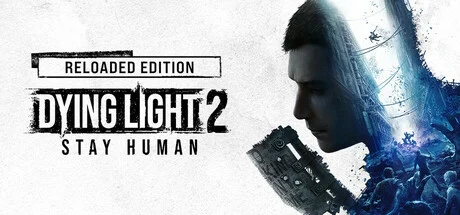
By shared mechanics rather than genre, the closest matches are Dying Light 2 Stay Human: Reloaded Edition (92% match), Far Cry 3 (85% match) and Warframe (83% match).
Steam lists these modes: Single-player, Multi-player, PvP, Online PvP and Co-op.
The minimum listed on Steam is: Processor: Intel® Core™ i5-2500 @3.3 GHz / AMD FX-8320 @3.5 GHz; Memory: 4 GB RAM DDR3; Graphics: NVIDIA® GeForce® GTX 560 / AMD Radeon™ HD 6870 (1GB VRAM).
It is listed at $24.99 on the US Steam store, checked 18 November 2026.
No takes yet. Be the first.
Also checkKinguin
Prices change often; the store page has the final one.
 92% match
 85% match
 83% match
 83% match
 83% match
 82% match
 82% match
 82% match
Store details, review counts and requirements come from Steam. Community tag votes come from SteamSpy, and themes and modes from IGDB. Depth and grind scores are produced by two separate language models reading that material, then reconciled and capped against community tags. A score the two models disagree on is marked low confidence.