Vehicle Building: depth 10 of 10, grind 5 of 10.
Players assemble fully-functional spacecraft from an array of parts based on realistic aerodynamic and orbital physics.
Games > Kerbal Space Program
 Now scanning App #220200
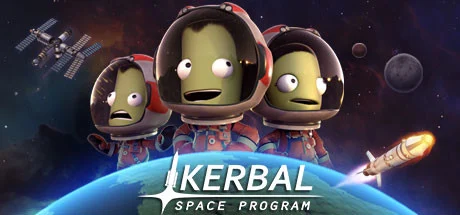
Kerbal Space Program is a physics-based simulation where players design and pilot rockets and spacecraft for a crew of extraterrestrial astronauts. It combines deep aerospace engineering challenges with open-system planetary exploration and a robust modding community.
Tell the Lab which mechanics you love and which you avoid. This box then makes a Play or Dodge call for you on every game.
Players assemble fully-functional spacecraft from an array of parts based on realistic aerodynamic and orbital physics.
The game expects players to learn technical concepts, solve propulsion problems, and master orbital mechanics.
Explorers launch missions to visit other planets, moons, and deep space bodies across a vast celestial system.
An incredible modding community provides numerous add-ons for parts, textures, and instruments to enhance gameplay.
Players enjoy endless design freedom in sandbox or career modes, creating rockets, mega space stations, and bases.
Players manage a roster of Kerbal astronauts, hiring crew members and occasionally recovering stranded pilots from deep space.
Career mode features a technology tree unlocked progressively using collected science data.
Spacecraft designs react dynamically to realistic aerodynamic and orbital physics simulations.
Career mode involves gathering science points from various locations to unlock new rocket parts.
The planetary systems and celestial bodies are procedurally generated for exploration.
Career mode features funds management and mission contracts to earn currency for the space program.
Players manage a roster of Kerbal astronauts who act as mission crew members.
Astronauts can be permanently lost when missions fail catastrophically.
Engineering challenges require figuring out how to construct stable rockets and calculate orbits.
Players can establish makeshift outposts or bases on planetary surfaces with parts and flags.
Parts are assembled from a pre-defined catalog rather than crafted through raw material collection.
Optional mods allow automated flight planning and execution for complex orbital maneuvers.
The career mode involves managing space program budgets, upgrading buildings, and hiring astronauts.
Crashed capsules and stranded flags organically mark historical mission sites on planets.
Time warping allows players to fast-forward through long interplanetary transit durations.
Light background flavor centers around the cheerful alien Kerbal species running a space program.
Players roleplay as space agency directors managing missions and stranded crews.
You’ll spend most of your time in Vehicle Building (depth 10) and Precision & Skill Difficulty (depth 9). Vehicle Building lets you piece together rockets from a large catalog of parts, and the physics engine forces you to respect realistic aerodynamics and orbital mechanics. Precision & Skill Difficulty pushes you to learn propulsion theory and orbital transfers, with a grind rating of 7, meaning repeated trial‑and‑error is expected. Open‑World Exploration (depth 8) adds a sandbox of planets and moons to visit once your craft can reach them, with a grind of 6. The overall grind sits in the mid‑high range, so players who enjoy methodical problem solving will thrive, while those who prefer instant action or shallow systems will likely bounce off it.
Its deepest systems are vehicle building (10/10), precision & skill difficulty (9/10) and open-world exploration (8/10).
Play Kerbal Space Program if you want a sandbox where every rocket part matters; you enjoy learning real physics while launching crafts; or you like designing vehicles that must actually fly.
Skip Kerbal Space Program if you dislike steep learning curves and constant trial‑error; you prefer fast‑action shooters over methodical simulations; or you have no patience for detailed engineering systems.
Yes, in places. Precision & Skill Difficulty scores 7/10 for grind, the highest in the game.
It has no story-driven, melee combat, boss encounters, loot & itemization, co-op PvE and gunplay. It only touches on environmental storytelling (1/10), lore depth (1/10), economy & trading (2/10), time pressure (1/10), crafting (1/10) and party & companions (2/10).
By shared mechanics rather than genre, the closest matches are Garry's Mod (77% match), Starfield (74% match) and Arma 3 (73% match).
Steam lists these modes: Single-player.
The minimum listed on Steam is: Processor:Core 2 Duo 2.0 Ghz; Memory:4 GB RAM; Graphics:DX10 (SM 4.0) capable, 512MB VRAM.
It is listed at $39.99 on the US Steam store, checked 18 November 2026.
No takes yet. Be the first.
Also checkKinguin
Lowest ever seen: $3.99 Price data from IsThereAnyDeal. Prices change often; the store page has the final one.
 77% match
 74% match
 73% match
 73% match
 72% match
 71% match
 71% match
 71% match
Store details, review counts and requirements come from Steam. Community tag votes come from SteamSpy, and themes and modes from IGDB. Depth and grind scores are produced by two separate language models reading that material, then reconciled and capped against community tags. A score the two models disagree on is marked low confidence.