Co-op PvE: depth 9 of 10, grind 2 of 10.
Game supports up to 6 players in online co‑op missions where teams retrieve items together.
Games > R.E.P.O.
 Now scanning App #3241660
R.E.P.O. is a chaotic co‑op horror where teams haul fragile loot while sneaking past monsters. The physics‑driven item handling creates constant puzzle‑like tension.
Tell the Lab which mechanics you love and which you avoid. This box then makes a Play or Dodge call for you on every game.
Game supports up to 6 players in online co‑op missions where teams retrieve items together.
Players locate and collect valuable physics‑based objects to sell and reach monetary goals.
Described as a horror game with tense atmosphere and monsters that can kill players.
Tags and reviews mention sneaking through dark mansions and avoiding monsters.
Runs feature permanent death where failing to extract causes the loss of progress and carried loot.
Once players acquire weapons, they can actively hunt down monsters and play the game more like an action shooter.
Fully physics-based objects and proximity voice chat create organic, reactive emergent gameplay moments.
Handling delicate physics objects carefully while avoiding lethal monsters demands precision and skill.
Players explore procedurally generated dark mansions and buildings to locate valuable objects.
Gameplay revolves around session-based runs where players gather funds to advance levels, facing permanent risks.
Monsters actively hunt players, creating constant tension and pressure to extract items successfully.
The game features gradual ability upgrades that players purchase as they progress through runs.
Runs feature randomized layouts and items, ensuring that every expedition plays out differently.
Players collect valuable physics-based items to sell at base for money required to advance levels.
Players choose from a variety of weapons, gear, and traps to purchase and utilize during runs.
Players can purchase various weapons, gear, and traps between runs to tailor their approach to encounters.
Fitting objects of different size, weight, and durability into a limited cart requires spatial puzzle decisions.
Players can occasionally engage monsters with tools or gear, though it is secondary to evasion and physics handling.
Survival elements focus entirely on avoiding dangerous monsters and extracting successfully rather than meters.
Atmospheric dystopian settings provide light environmental context without a traditional narrative.
Proximity voice chat encourages casual banter, screaming, and humorous player interactions.
Encounters feature various unique monsters with distinct behaviors, but lack formal traditional boss fights.
Basic navigation requires occasional simple jumps while traversing indoor environments.
Minimal backstory involves satisfying a creator's desires through retrieved valuables.
Physics-based object manipulation allows for humorous emergent situations and chaotic stacking.
Community support exists, though official frequent updates mean many players stick to the base game.
There are minor ranged tools or items available during runs.
Communication relies heavily on player proximity voice chat rather than dialogue trees.
The game explicitly has no traditional story, focusing entirely on cooperative sandbox runs.
Players can occasionally mess with teammates or joke around in lobbies.
Players manage and maneuver small carts used to haul loot back to extraction points.
R.E.P.O. centers on co-op PvE with a depth score of 9 and resource gathering sitting at 7, alongside horror and tension rated at 7 depth. You and up to six players work together to sneak through dark mansions, locate valuable physics-based objects, and haul fragile loot back to extract while avoiding lethal monsters. The grind sits at a low 2 to 3 across these core loops, focusing primarily on session-based execution rather than repetitive mandatory tasks. You will bounce off this experience if you prefer solo progression, structured narratives, or games without permanent death, since failing to extract causes the loss of all carried items and session progress.
Its deepest systems are co-op PvE (9/10), resource gathering (7/10) and horror & tension (7/10).
Play R.E.P.O. if you enjoy chaotic online co-op runs; you want tense physics-based looting; or you like sneaking past lethal monsters.
Skip R.E.P.O. if you dislike permanent death risks; you want a deep solo campaign; or you avoid physics-heavy handling.
Not much. Its highest grind score is 3/10, for resource gathering.
It has no crafting, branching narrative, base building, vehicle combat, colony & NPC management and metroidvania navigation. It only touches on story-driven (1/10), lore depth (2/10), boss encounters (2/10), mod ecosystem (2/10), competitive PvP (1/10) and sandbox creativity (2/10).
By shared mechanics rather than genre, the closest matches are Lethal Company (82% match), Deep Rock Galactic (82% match) and PAYDAY 2 (79% match).
Steam lists these modes: Single-player, Multi-player, Co-op and Online Co-op.
The minimum listed on Steam is: Processor: Core i5 6600; Memory: 8 GB RAM; Graphics: GTX 970; Storage: 1 GB available space.
It is listed at $9.99 on the US Steam store, checked 18 November 2026.
No takes yet. Be the first.
Also checkKinguin
Lowest ever seen: $6.49 Price data from IsThereAnyDeal. Prices change often; the store page has the final one.
 82% match
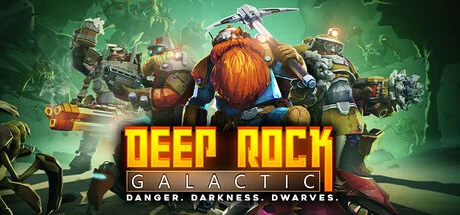 82% match
 79% match
 78% match
 77% match
 77% match
 77% match
 77% match
Store details, review counts and requirements come from Steam. Community tag votes come from SteamSpy, and themes and modes from IGDB. Depth and grind scores are produced by two separate language models reading that material, then reconciled and capped against community tags. A score the two models disagree on is marked low confidence.