My Lab

Games > Rocket League®

Rocket League® cover art Now scanning App #252950

Rocket League®

  • Action, Indie, Racing
  • Jul 6, 2015
  • Psyonix LLC
  • On Nintendo Switch, PC (Windows), PlayStation 4, PlayStation 5, Xbox One, Xbox Series X|S
How it plays7 core moves

Rocket League blends fast‑paced, timed matches with high‑skill vehicle control. Competitive play and a cosmetics‑driven economy shape the experience.

Steam reviews302,697Very Positive
Median playtime--per owner
Steam price--US store
Steam players86%recommend it
Critics89/10017 reviews, IGDB
DNA confidence60%48 of 48 mechanics scored

Your call

Personal, from your Lab
?

Tell the Lab which mechanics you love and which you avoid. This box then makes a Play or Dodge call for you on every game.

    Set up My Lab
    Compare with another game
    Does this scan match the game?
    One score looks wrong?

    Move list

    Depth 0-10 / Grind 1-10
    Precision & Skill Difficulty: depth 9 of 10, grind 3 of 10.

    Gameplay demands precise car control and timing to hit the ball.

    Competitive PvP: depth 8 of 10, grind 6 of 10.

    Online matches include casual and competitive modes with ranked play.

    Driving & Handling

    Low confidence
    Driving & Handling: depth 8 of 10, grind 2 of 10.

    The game centers on controlling rocket-powered cars to hit a ball with physics-driven precision.

    Vehicle Combat

    Low confidence
    Vehicle Combat: depth 6 of 10, grind 5 of 10.

    Players control physics-driven cars to compete in high-speed vehicular sports matches.

    Time Pressure: depth 5 of 10, grind 2 of 10.

    Matches are timed, typically five minutes, adding pressure.

    Loot & Itemization: depth 4 of 10, grind 6 of 10.

    Game features cosmetics, blueprints, and an item shop for cars and decals.

    Build Customization

    Low confidence
    Build Customization: depth 4 of 10, grind 4 of 10.

    Players unlock and equip car bodies, decals, and boost trails via blueprints and credits.

    Also in the game9 lighter systems

    Vehicle Building

    Barely there
    Vehicle Building: depth 2 of 10, grind 2 of 10.

    Players can customize vehicle cosmetics and appearance items.

    Economy & Trading

    Barely there
    Economy & Trading: depth 2 of 10, grind 2 of 10.

    Players trade or purchase various vehicle cosmetics and items through menus.

    Party & Companions

    Barely there
    Party & Companions: depth 2 of 10, grind 2 of 10.

    Players can queue with online teammates in structured matches.

    Platforming

    Barely there
    Platforming: depth 2 of 10, grind 1 of 10.

    Vehicles can jump and boost through the air during matches.

    Rhythm & Music

    Barely there
    Rhythm & Music: depth 2 of 10, grind 1 of 10.

    The game features an acclaimed soundtrack accompanying the matches.

    Sandbox Creativity

    Barely there
    Sandbox Creativity: depth 2 of 10, grind 2 of 10.

    Mutator custom match settings let players alter core rules.

    Mod Ecosystem

    Barely there
    Mod Ecosystem: depth 2 of 10, grind 2 of 10.

    Players utilize community workshop maps and external tools.

    Co-op PvE

    Barely there
    Co-op PvE: depth 1 of 10, grind 1 of 10.

    Special extra modes offer occasional cooperative variations.

    Social & Roleplay

    Barely there
    Social & Roleplay: depth 1 of 10, grind 1 of 10.

    Players communicate using quick-chat options during matches.

    DNA scanTop 8
    Precision &SkillDifficultyCompetitivePvPDriving &HandlingVehicle CombatTime PressureLoot &ItemizationBuildCustomizationVehicleBuilding
    DepthGrind

    Play it or dodge it?

    Verdict from the scan

    Rocket League centers on precision and skill difficulty at a depth of 9 and competitive PvP at an 8, defining an experience built purely around car control and ranked matches. Driving and handling sits at an 8, demanding high-speed physics mastery during five-minute timed matches. The grind sits at a moderate level for core mechanics, though loot and itemization reaches a 6 for cosmetic unlocks. You will bounce off this if you dislike high-skill competitive environments or want single-player progression, roleplaying depth, and deep narratives. There are no campaigns, gunplay, or complex resource loops here; success relies entirely on your physical control of rocket-powered vehicles and spatial awareness against other players.

    Play it if

    • You want high-skill car control and timing
    • You enjoy competitive online ranked matches
    • You like physics-driven sports gameplay

    Dodge it if

    • You dislike intense competitive pressure
    • You want deep single-player campaigns
    • You expect rich roleplaying mechanics

    Not sure what you like? Take the 1-minute Gamer DNA Test

    Quick answers

    Built from the scan above

    What do you actually do in Rocket League®?

    Its deepest systems are precision & skill difficulty (9/10), competitive PvP (8/10) and driving & handling (8/10).

    Who should play Rocket League®?

    Play Rocket League® if you want high-skill car control and timing; you enjoy competitive online ranked matches; or you like physics-driven sports gameplay.

    Who should skip Rocket League®?

    Skip Rocket League® if you dislike intense competitive pressure; you want deep single-player campaigns; or you expect rich roleplaying mechanics.

    Is Rocket League® grindy?

    Moderately. The most repetitive part is competitive PvP, at 6/10 for grind.

    What does Rocket League® not have?

    It has no open-world exploration, story-driven, environmental storytelling, lore depth, melee combat and boss encounters. It only touches on co-op PvE (1/10), mod ecosystem (2/10), economy & trading (2/10), sandbox creativity (2/10), party & companions (2/10) and platforming (2/10).

    What games play like Rocket League®?

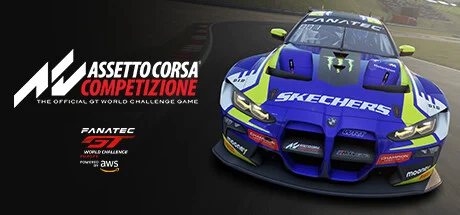
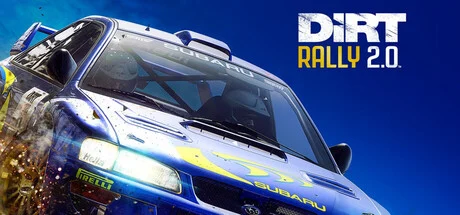
    By shared mechanics rather than genre, the closest matches are Battlefield 4™ (81% match), Assetto Corsa Competizione (80% match) and DiRT Rally 2.0 (80% match).

    Is Rocket League® single-player or multiplayer?

    Steam lists these modes: Single-player, Multi-player, PvP, Online PvP and Shared/Split Screen PvP.

    What PC do you need to run Rocket League®?

    The minimum listed on Steam is: Processor: 2.5 GHz Dual core; Memory: 4 GB RAM; Graphics: NVIDIA GeForce 760, AMD Radeon R7 270X, or better; Storage: 20 GB available space.

    Ranked in

    Best-of lists this game makes the top ten of

    Player takes

    0 so far

    No takes yet. Be the first.

    Best price

    US prices, checked 20 Nov 2026
    1. Epic Game Store Free Go to store: Rocket League® on Epic Game Store

    Lowest ever seen: $9.97 Price data from IsThereAnyDeal. Prices change often; the store page has the final one.
    Plays like

    Matched on mechanics, not genre

    All games like Rocket League®

    Fixes and guides

    From our sister site Fixspawn
    Rocket League® not running right?9 known issues with step-by-step fixes, plus system requirements and platform notes, on Fixspawn.See all fixes

    PC specs

    As listed on Steam

    Minimum

    • Requires a 64-bit processor and operating system
    • OS *: Windows 7 (64 bit) or Newer (64 bit) Windows OS
    • Processor: 2.5 GHz Dual core
    • Memory: 4 GB RAM
    • Graphics: NVIDIA GeForce 760, AMD Radeon R7 270X, or better
    • DirectX: Version 11
    • Network: Broadband Internet connection
    • Storage: 20 GB available space

    Recommended

    • Requires a 64-bit processor and operating system
    • OS *: Windows 7 (64 bit) or Newer (64 bit) Windows OS
    • Processor: 3.0+ GHz Quad core
    • Memory: 8 GB RAM
    • Graphics: NVIDIA GeForce GTX 1060, AMD Radeon RX 470, or better
    • DirectX: Version 11
    • Network: Broadband Internet connection
    • Storage: 20 GB available space
    • Additional Notes: Gamepad or Controller Recommended

    About this data

    Verified 15 Nov 2026

    Store details, review counts and requirements come from Steam. Community tag votes come from SteamSpy, and themes and modes from IGDB. Depth and grind scores are produced by two separate language models reading that material, then reconciled and capped against community tags. A score the two models disagree on is marked low confidence.

    How scoring works