Deck Building: depth 9 of 10, grind 7 of 10.
Players construct and refine a deck of cards each run, shaping strategy through card acquisition and removal.
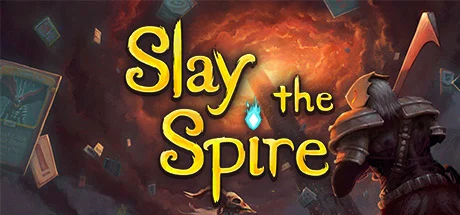
Games > Slay the Spire
 Now scanning App #646570
Slay the Spire blends deck‑building with turn‑based combat in a procedurally generated roguelike structure. Success hinges on crafting effective decks while navigating random encounters and bosses.
Tell the Lab which mechanics you love and which you avoid. This box then makes a Play or Dodge call for you on every game.
Players construct and refine a deck of cards each run, shaping strategy through card acquisition and removal.
Each attempt is a self‑contained run with permanent death, encouraging repeated playthroughs.
Each act culminates in a challenging boss fight that tests the built deck.
The map of rooms, events, and enemies is generated anew for every run.
Combat resolves in turn‑based card battles where positioning is abstracted to card play order.
Defeating enemies and opening chests yields cards and relics that modify gameplay.
Uncovering the secrets of the Spire requires piecing together flavor text from relics and events.
Combat turns function as tactical puzzles where players calculate exact damage and block values.
Steam Workshop support enables custom characters, multiplayer mods, and new gameplay content.
Shops allow players to spend gold on new cards, relics, and card removal.
Map events present text prompts with multiple options that yield rewards or curses.
Lore and tower history are conveyed through cryptic event descriptions and item flavor text.
The narrative is minimal, framed around an ascent up a cursed tower to slay the heart.
Path choices on the map and event decisions offer distinct branching outcomes.
Players can occasionally transform or upgrade cards at specific locations during a run.
Gold and rewards are collected from defeated monsters and events to spend at shops.
New cards and characters are unlocked progressively as player experience levels increase.
Certain relics and cards interact with enemy intents in emergent ways.
The game features no active turn timers, allowing players to plan moves at their own pace.
Community mods introduce cooperative play styles, though the base game is strictly single-player.
Attacks and card strikes deal physical damage to enemies in turn-based encounters.
The map consists of branching nodes that players choose to explore each act.
Boss encounters and cursed runs create high stakes and psychological tension.
High ascension levels demand precise resource management and mastery over complex mechanics.
Slay the Spire asks you to master deck building at a depth of 9 and roguelike runs at a depth of 9, while navigating boss encounters rated at depth 6. These systems shape a lean strategy game where every card choice and room path directly influences your survival against strict run-ending checks. The grind sits at a demanding 7 for card mastery and 8 for the repeated runs required to unlock all game features and optimal strategies. You will bounce off this experience if you dislike high-difficulty procedural randomization or if you prefer persistent character progression over starting fresh after every defeat. Players who enjoy careful statistical management and tight optimization loops will find plenty to test their tactical patience.
Its deepest systems are deck building (9/10), roguelike runs (9/10) and boss encounters (6/10).
Play Slay the Spire if you want deep deck building with high replay value; you enjoy testing builds against difficult bosses; or you like turning random card draws into wins.
Skip Slay the Spire if you dislike losing all progress upon death; you find repetitive run structures frustrating; or you want persistent character progression.
Yes, in places. Roguelike Runs scores 8/10 for grind, the highest in the game.
It has no build customization, gunplay, competitive PvP, sandbox creativity, party & companions and stealth. It only touches on precision & skill difficulty (1/10), open-world exploration (1/10), environmental storytelling (2/10), story-driven (2/10), melee combat (1/10) and skill trees & progression (1/10).
By shared mechanics rather than genre, the closest matches are Balatro (85% match), Loop Hero (72% match) and Inscryption (71% match).
Steam lists these modes: Single-player.
The minimum listed on Steam is: Processor: 2.0 Ghz; Memory: 2 GB RAM; Graphics: 1Gb Video Memory, capable of OpenGL 3.0+ support (2.1 with ARB extensions acceptable); Storage: 1 GB available space.
It is listed at $24.99 on the US Steam store, checked 19 November 2026.
No takes yet. Be the first.
Also checkKinguin
Lowest ever seen: $2.49 Price data from IsThereAnyDeal. Prices change often; the store page has the final one.
 85% match
 72% match
 71% match
 70% match
 68% match
 68% match
 68% match
 68% match
Store details, review counts and requirements come from Steam. Community tag votes come from SteamSpy, and themes and modes from IGDB. Depth and grind scores are produced by two separate language models reading that material, then reconciled and capped against community tags. A score the two models disagree on is marked low confidence.