My Lab

Games > STAR WARS Jedi: Fallen Order™

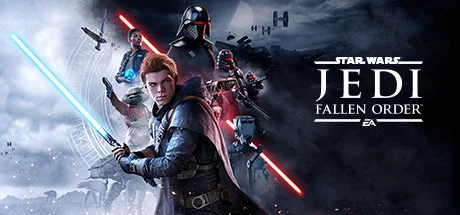
STAR WARS Jedi: Fallen Order™ cover art Now scanning App #1172380

STAR WARS Jedi: Fallen Order™

  • Action, Adventure
  • Nov 14, 2019
  • Respawn Entertainment
  • On PC (Windows), PlayStation 4, PlayStation 5, Xbox One, Xbox Series X|S
How it plays12 core moves

Star Wars Jedi: Fallen Order blends lightsaber melee, Force powers and Metroidvania exploration into a core combat‑driven experience. Story, puzzles and platforming add depth while most other systems are absent.

Steam reviews93,271Very Positive
Median playtime13.1 hper owner
Steam price$7.99US store
Steam players89%recommend it
Critics83/10013 reviews, IGDB
DNA confidence73%48 of 48 mechanics scored

Your call

Personal, from your Lab
?

Tell the Lab which mechanics you love and which you avoid. This box then makes a Play or Dodge call for you on every game.

    Set up My Lab
    Compare with another game
    Does this scan match the game?
    One score looks wrong?

    Move list

    Depth 0-10 / Grind 1-10
    Melee Combat: depth 9 of 10, grind 6 of 10.

    Lightsaber melee combat is the primary way to defeat enemies throughout the game.

    Metroidvania Navigation: depth 9 of 10, grind 6 of 10.

    Backtracking between areas after gaining abilities defines the Metroidvania structure.

    Boss Encounters: depth 7 of 10, grind 5 of 10.

    Multiple boss fights punctuate each planet, requiring skill and pattern learning.

    Precision & Skill Difficulty: depth 7 of 10, grind 5 of 10.

    Combat demands precise timing and pattern recognition similar to Soulslike games.

    Story-Driven: depth 7 of 10, grind 2 of 10.

    A strong story follows Cal Kestis’s journey across the galaxy.

    Skill Trees & Progression: depth 6 of 10, grind 4 of 10.

    Force powers are unlocked via a skill tree that expands as you progress.

    Magic & Ranged Abilities: depth 5 of 10, grind 4 of 10.

    Force abilities provide ranged attacks and traversal options alongside lightsaber combat.

    Platforming: depth 5 of 10, grind 4 of 10.

    Platforming sections require wall‑climbing, ledge‑hopping, and sliding.

    Lore Depth: depth 5 of 10, grind 2 of 10.

    Extensive Star Wars lore is presented via logs and NPCs.

    Loot & Itemization: depth 5 of 10, grind 4 of 10.

    Various lightsabers and gear are found, each with distinct stats.

    Environmental Storytelling: depth 5 of 10, grind 2 of 10.

    World design reveals lore through visuals and hidden items.

    Open-World Exploration: depth 4 of 10, grind 3 of 10.

    Exploration across planetary zones drives progression and ability gating.

    Also in the game11 lighter systems

    Puzzle Solving

    Secondary system
    Puzzle Solving: depth 4 of 10, grind 2 of 10.

    Force powers are used to solve environmental puzzles throughout levels.

    Gunplay

    Barely there
    Gunplay: depth 2 of 10, grind 1 of 10.

    Occasional blaster shots serve as ranged attacks but are not central.

    Stealth

    Barely there
    Stealth: depth 2 of 10, grind 1 of 10.

    Some enemies can be avoided using basic stealth, but it's not a focus.

    Build Customization: depth 2 of 10, grind 1 of 10.

    Outfit colors and lightsaber hilt can be changed, but options are limited.

    Dialogue Choices

    Barely there
    Dialogue Choices: depth 2 of 10, grind 1 of 10.

    Conversation nodes offer simple yes/no responses without major impact.

    Immersive-Sim Reactivity: depth 2 of 10, grind 1 of 10.

    Certain obstacles can be solved with different Force powers, but options are few.

    Branching Narrative: depth 2 of 10, grind 1 of 10.

    Few choices affect minor dialogue, but story remains linear.

    Party & Companions

    Barely there
    Party & Companions: depth 2 of 10, grind 2 of 10.

    Companion droid BD‑1 assists with scanning and minor support.

    Time Pressure

    Barely there
    Time Pressure: depth 1 of 10, grind 1 of 10.

    No strict time limits force pacing; you explore at your own speed.

    Crafting

    Barely there
    Crafting: depth 1 of 10, grind 1 of 10.

    Collecting materials lets you upgrade gear, but crafting is minimal.

    Resource Gathering

    Barely there
    Resource Gathering: depth 1 of 10, grind 2 of 10.

    Gathering crystals and parts is needed for upgrades.

    DNA scanTop 8
    Melee CombatMetroidvaniaNavigationBossEncountersPrecision &SkillDifficultyStory-DrivenSkill Trees &ProgressionMagic & RangedAbilitiesPlatforming
    DepthGrind

    Play it or dodge it?

    Built from the scan

    STAR WARS Jedi: Fallen Order™ is built around melee combat (9/10), metroidvania navigation (9/10) and boss encounters (7/10). Grind is moderate, averaging 3.8/10 across its systems. It has no co-op PvE, mod ecosystem and competitive PvP.

    Play it if

    • You want deep melee combat (9/10)
    • You want deep metroidvania navigation (9/10)

    Dodge it if

    • You want to play with friends: it is single-player
    • You want co-op PvE: it has none
    • You want mod ecosystem: it has none

    Not sure what you like? Take the 1-minute Gamer DNA Test

    Quick answers

    Built from the scan above

    What do you actually do in STAR WARS Jedi: Fallen Order™?

    Its deepest systems are melee combat (9/10), metroidvania navigation (9/10) and boss encounters (7/10).

    Who should play STAR WARS Jedi: Fallen Order™?

    Play STAR WARS Jedi: Fallen Order™ if you want deep melee combat (9/10); or you want deep metroidvania navigation (9/10).

    Who should skip STAR WARS Jedi: Fallen Order™?

    Skip STAR WARS Jedi: Fallen Order™ if you want to play with friends: it is single-player; you want co-op PvE: it has none; or you want mod ecosystem: it has none.

    Is STAR WARS Jedi: Fallen Order™ grindy?

    Moderately. The most repetitive part is melee combat, at 6/10 for grind.

    What does STAR WARS Jedi: Fallen Order™ not have?

    It has no co-op PvE, mod ecosystem, competitive PvP, economy & trading, horror & tension and base building. It only touches on build customization (2/10), gunplay (2/10), resource gathering (1/10), time pressure (1/10), crafting (1/10) and party & companions (2/10).

    Is STAR WARS Jedi: Fallen Order™ single-player or multiplayer?

    Steam lists these modes: Single-player.

    What PC do you need to run STAR WARS Jedi: Fallen Order™?

    The minimum listed on Steam is: Processor: AMD FX-6100/Intel i3-3220 or Equivalent; Memory: 8 GB RAM; Graphics: AMD Radeon HD 7750, NVIDIA GeForce GTX 650 or Equivalent; Storage: 55 GB available space.

    How much does STAR WARS Jedi: Fallen Order™ cost?

    It is listed at $7.99 on the US Steam store, checked 20 November 2026.

    Player takes

    0 so far

    No takes yet. Be the first.

    Best price

    US prices, checked 20 Nov 2026
    1. SteamLowest now -80% $39.99 $7.99 Go to store: STAR WARS Jedi: Fallen Order™ on Steam
    2. EA Store -80% $39.99 $7.99 Go to store: STAR WARS Jedi: Fallen Order™ on EA Store
    3. Epic Game Store $39.99 Go to store: STAR WARS Jedi: Fallen Order™ on Epic Game Store

    Lowest ever seen: $3.19 Price data from IsThereAnyDeal. Prices change often; the store page has the final one.

    PC specs

    As listed on Steam

    Minimum

    • Requires a 64-bit processor and operating system
    • OS *: 64-bit Windows 7/8.1/10
    • Processor: AMD FX-6100/Intel i3-3220 or Equivalent
    • Memory: 8 GB RAM
    • Graphics: AMD Radeon HD 7750, NVIDIA GeForce GTX 650 or Equivalent
    • DirectX: Version 11
    • Storage: 55 GB available space

    Recommended

    • Requires a 64-bit processor and operating system
    • OS *: 64-bit Windows 7/8.1/10
    • Processor: AMD Ryzen 7 1700/Intel i7-6700K or Equivalent
    • Memory: 16 GB RAM
    • Graphics: AMD RX Vega 56, Nvidia GTX 1070/GTX1660Ti or Equivalent
    • DirectX: Version 11
    • Storage: 55 GB available space

    About this data

    Verified 20 Nov 2026

    Store details, review counts and requirements come from Steam. Community tag votes come from SteamSpy, and themes and modes from IGDB. Depth and grind scores are produced by two separate language models reading that material, then reconciled and capped against community tags. A score the two models disagree on is marked low confidence.

    How scoring works