Farming & Life Sim: depth 10 of 10, grind 6 of 10.
Players spend days planting, harvesting, and tending crops across seasons.
Games > Stardew Valley
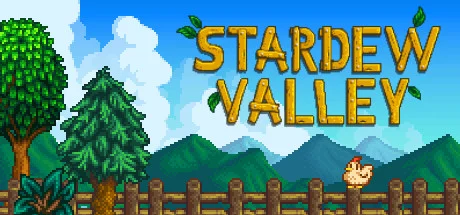 Now scanning App #413150
Stardew Valley blends farming, crafting, and relationship building in a relaxed open‑world setting. Progress is shaped by seasonal cycles and optional grinding for profit or completion.
Tell the Lab which mechanics you love and which you avoid. This box then makes a Play or Dodge call for you on every game.
Players spend days planting, harvesting, and tending crops across seasons.
Each in-game day runs on a strict clock, forcing players to manage daily energy and schedules.
The game features a wide crafting system for items like preserves, tools, and machines.
Collecting wood, ore, and other materials is required for upgrades and crafting.
Designing and decorating the farm layout allows for extensive creative expression.
Players befriend townsfolk by talking, giving gifts, and engaging with their daily routines and stories.
Players can run a shared farm, fish, and clear mines together in online multiplayer.
Players can explore the town, mines, and later Ginger Island.
Players befriend, date, and marry townsfolk while attending seasonal festivals.
Crops, artisan items, and gathered materials are sold to manage finances and fund upgrades.
Uncovering character secrets and restoring the town provide a gentle overarching narrative.
The community actively creates and supports a wide variety of gameplay and cosmetic mods.
Players set up sprinklers and artisan machinery like kegs and jars to process goods efficiently.
Farm buildings and upgrades are constructed using gathered resources.
Players hunt for mysterious artifacts, weapon drops, and rare rings in the mines.
Players converse with townsfolk, choose romantic partners, and select story paths.
NPC routines and town details subtly reveal backstories and secrets.
Secret notes and character dialogues uncover the history of Pelican Town.
Players venture into the mines and other areas to fight monsters using basic weapons and tools.
Mine layouts and floor configurations are procedurally generated on each visit.
Players occasionally utilize basic ranged attacks or items in combat encounters.
The mines feature occasional special floor challenges and tougher encounters.
Players manage energy levels by eating food items to continue daily activities.
Players can contribute to town upgrades like restoring the Community Center.
Players pick skills upon leveling up and equip various boots, rings, and weapons.
Character skills level up through repetitive actions, offering branching profession perks.
Villagers react to player actions, gifts, and seasonal events.
Certain areas and mine levels unlock progressively as tools are upgraded.
Players occasionally solve simple secret notes or environmental riddles.
Fishing mini-games and combat require timed button inputs and coordination.
Descending deep into the monster-filled mines introduces mild tension.
Choosing between the Community Center and JojaMart impacts the local storyline.
Stardew Valley centers on a massive Farming and Life Sim with a depth score of 10 and a grind of 6, where you spend days tending crops and managing seasonal cycles. This is supported by Time Pressure at depth 6 and Crafting at depth 6, keeping your daily energy tight as you build machines and gather resources. The grind sits at a moderate level for most activities, asking for repetitive planting and resource gathering to fund upgrades and expand your layout. You will bounce off this experience if you dislike strict in-game clocks or repetitive daily routines that demand routine upkeep.
Its deepest systems are farming & life sim (10/10), time pressure (6/10) and crafting (6/10).
Play Stardew Valley if you want a deep farming system that grows across seasons; you enjoy designing and decorating your own farm layout; or you like befriending townsfolk and joining festivals.
Skip Stardew Valley if you dislike strict daily energy and time limits; you want fast action instead of routine crop tending; or you hate repetitive resource gathering and crafting.
Moderately. The most repetitive part is farming & life sim, at 6/10 for grind.
It has no gunplay, competitive PvP, party & companions, stealth, platforming and driving & handling. It only touches on precision & skill difficulty (2/10), build customization (2/10), boss encounters (2/10), skill trees & progression (2/10), horror & tension (2/10) and magic & ranged abilities (2/10).
By shared mechanics rather than genre, the closest matches are Schedule I (83% match), Starbound (79% match) and Raft (78% match).
Steam lists these modes: Single-player, Multi-player, Co-op, Online Co-op and LAN Co-op.
The minimum listed on Steam is: Processor: 2 Ghz; Memory: 2 GB RAM; Graphics: 256 mb video memory, shader model 3.0+; Storage: 500 MB available space.
It is listed at $14.99 on the US Steam store, checked 15 November 2026.
No takes yet. Be the first.
Also checkKinguin
Lowest ever seen: $7.49 Price data from IsThereAnyDeal. Prices change often; the store page has the final one.
 83% match
 79% match
 78% match
 78% match
 77% match
 77% match
 77% match
 76% match
Store details, review counts and requirements come from Steam. Community tag votes come from SteamSpy, and themes and modes from IGDB. Depth and grind scores are produced by two separate language models reading that material, then reconciled and capped against community tags. A score the two models disagree on is marked low confidence.