Mod Ecosystem: depth 9 of 10, grind 3 of 10.
A large community creates mods that overhaul graphics, gameplay, and add features.
Games > The Elder Scrolls IV: Oblivion® Game of the Year Edition (2009)
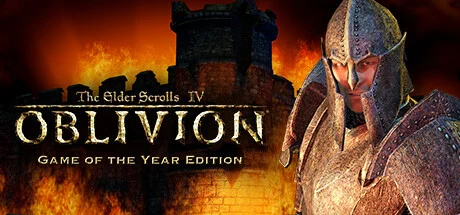 Now scanning App #22330
Oblivion is a sprawling open‑world RPG where you explore, fight, and cast spells at your own pace. Its gameplay centers on skill‑based progression and loot hunting.
Tell the Lab which mechanics you love and which you avoid. This box then makes a Play or Dodge call for you on every game.
A large community creates mods that overhaul graphics, gameplay, and add features.
Players freely roam the province of Cyrodiil, visiting cities, dungeons, and wilderness.
Extensive in-game books and histories provide deep world lore.
Skills improve through use, forming a flexible, skill‑based leveling system.
Real‑time combat lets you swing swords, axes, or fists against a variety of enemies.
Oblivion offers a deep spell system where you can learn, craft, and cast many magical effects.
A central narrative follows the quest to close Oblivion gates and defeat Mehrunes Dagon.
Books, notes, and world details convey lore without cutscenes.
Defeated foes drop diverse weapons, armor, and items for equip or sale.
Potion brewing and item repair are done through the inventory crafting interface.
Quest outcomes can vary, leading to different faction standings.
Players can crouch and sneak to avoid enemies, a core gameplay option.
Followers can be recruited to assist in combat and quests.
Some quests have multiple solutions based on player choices.
Players can freely explore and experiment with character builds.
Conversations provide multiple response options that can influence quests.
Major foes like Mehrunes Dagon serve as boss fights throughout the questline.
Ingredients and loot are collected from the world to craft potions and gear.
Dungeon doors and mechanisms require solving simple puzzles.
Combat timing and positioning affect hit success.
Shops allow buying and selling of items, forming a simple trade loop.
Weapons and armor can be upgraded and enchanted, offering limited customization.
Occasional jumps across gaps are required during exploration.
Dark dungeons and hostile creatures create tense moments.
Players can buy homes in various cities and decorate them with items, though full construction requires mods.
Players must occasionally sleep in beds to apply accumulated level-up attribute points.
Certain timed quests or waiting mechanics exist, but players generally dictate their own pace.
Companions and hired followers can be commanded to follow or wait at specific locations.
Dungeons utilize randomized layouts and prefabricated modular segments to populate the game world.
Certain doors and areas require specific keys or lockpicking skill tiers to unlock progression.
You step into a sprawling open world defined by open-world exploration at depth nine and skill trees and progression at depth eight. As you roam Cyrodiil, your abilities improve strictly through use rather than arbitrary point dumps. Magic and ranged abilities sit at depth seven, letting you craft custom spells and experiment with magical effects. The grind sits at a moderate level six for progression and loot hunting, meaning you will repeat actions to raise specific skills like blade or stealth. You will bounce off this experience if you expect modern, polished action combat or a tightly paced narrative without downtime. The mechanical systems are dated, and managing your inventory and faction standing requires patience. If you prefer streamlined quests and quick combat encounters, the slow pacing of the skill progression and world exploration will test your tolerance.
Its deepest systems are mod ecosystem (9/10), open-world exploration (9/10) and lore depth (8/10).
Play The Elder Scrolls IV: Oblivion® Game of the Year Edition (2009) if you want open exploration across a massive world; you prefer skill progression driven by actual use; or you enjoy creating custom spells and magic effects.
Skip The Elder Scrolls IV: Oblivion® Game of the Year Edition (2009) if you dislike repetitive skill grinding for stats; you expect modern and fluid real-time combat; or you want a fast-paced and tightly focused story.
Moderately. The most repetitive part is skill trees & progression, at 6/10 for grind.
It has no co-op PvE, gunplay, competitive PvP, driving & handling, social & roleplay and vehicle combat. It only touches on time pressure (1/10), horror & tension (2/10), platforming (2/10), base building (1/10), procedural generation (1/10) and survival needs (1/10).
By shared mechanics rather than genre, the closest matches are The Elder Scrolls V: Skyrim Special Edition (89% match), The Elder Scrolls V: Skyrim (87% match) and Fallout 3: Game of the Year Edition (86% match).
Steam lists these modes: Single-player.
The minimum listed on Steam is: Processor: 2 Ghz Intel Pentium 4 or equivalent; Memory: 512 MB; Graphics: 128 MB Direct3D compatible video card and DirectX 9.0 compatible driver.
It is listed at $14.99 on the US Steam store, checked 19 November 2026.
No takes yet. Be the first.
Also checkKinguin
Lowest ever seen: $2.17 Price data from IsThereAnyDeal. Prices change often; the store page has the final one.
 89% match
 87% match
 86% match
 85% match
 84% match
 84% match
 84% match
 83% match
All games like The Elder Scrolls IV: Oblivion® Game of the Year Edition (2009)
Store details, review counts and requirements come from Steam. Community tag votes come from SteamSpy, and themes and modes from IGDB. Depth and grind scores are produced by two separate language models reading that material, then reconciled and capped against community tags. A score the two models disagree on is marked low confidence.