Story-Driven
Low confidence Story-Driven: depth 7 of 10, grind 1 of 10.
The entire experience centers on Lara Croft's cinematic origin story and character growth.
Games > Tomb Raider Game of the Year
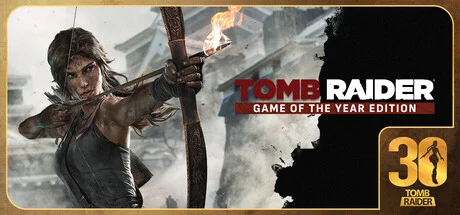 Now scanning App #203160
Tomb Raider (2013) is a cinematic action-adventure game that follows Lara Croft's gritty origin story as she evolves into a hardened survivor. It blends intense third-person combat, climbing, environmental puzzles, and exploration across a detailed island setting.
Tell the Lab which mechanics you love and which you avoid. This box then makes a Play or Dodge call for you on every game.
The entire experience centers on Lara Croft's cinematic origin story and character growth.
Players engage in fast, punchy action using improvised melee strikes alongside firearms during encounters.
Traversal involves extensive climbing, jumping, and navigating collapsing structures across the island.
Combat relies heavily on shooting enemies using rifles and a prominent bow system throughout the adventure.
Players can sneak around and pick enemies apart quietly before open combat ensues.
Optional tombs and main paths feature environmental puzzles that break up the gunfire.
Optional tombs and scattered documents reveal background lore about the island of Yamatai.
The game balances linear narrative momentum with moderately sized, explorable areas and hidden collectibles.
Backtracking to previous hubs with newly unlocked climbing tools opens up previously blocked areas.
Quick-time events and action sequences demand precise timing and reflexes.
Skill points unlock new abilities across specialized survival, brawler, and hunter trees.
Experience points earned from combat and exploration are spent on linear tier upgrades.
Gathering salvage components and collectible relics is tied to upgrading equipment.
Players salvage scrap and materials to upgrade weapons and gear at base camps.
Lara can use a hunting bow as a primary ranged weapon throughout the adventure.
Weapons are acquired predictably through story progression rather than random loot drops.
A tacked-on multiplayer mode features minor cooperative and competitive matches.
The dead multiplayer component includes basic player-versus-player modes.
The narrative heavily emphasizes survival themes, though actual survival meters are absent.
Conversations feature occasional dialogue choices without branching narrative consequences.
Combat encounters allow some stealth and environmental takedowns, but solutions are mostly linear.
The narrative follows a strictly linear origin story with fixed plot milestones.
Players use unofficial community mods via Nexus to resolve graphical issues and camera shaking.
Tomb Raider frames Lara Croft's origin story through a tightly paced cinematic lens. The experience is defined by platforming at a 6 out of 10 depth, gunplay sitting at 6, and storytelling driving the progression at a 7 depth. You spend your time navigating collapsing island structures, engaging in third-person shootouts with a prominent bow system, and hunting down hidden collectibles in moderately sized areas. The grind across these systems sits at a manageable 2 out of 10, meaning mechanics like crafting and resource gathering require little repetitive padding. You will bounce off this action-adventure title if you want deep survival mechanics, complex open-world simulations, or zero reliance on quick-time event sequences.
Its deepest systems are story-driven (7/10), melee combat (6/10) and platforming (6/10).
Play Tomb Raider Game of the Year if you enjoy cinematic action and character progression; you want smooth platforming across island ruins; or you like environmental puzzles mixed with gunplay.
Skip Tomb Raider Game of the Year if you dislike quick-time events and precise reflexes; you want deep survival or crafting systems; or you prefer fully open worlds without linear paths.
Not much. Its highest grind score is 2/10, for melee combat.
It has no economy & trading, sandbox creativity, party & companions, driving & handling, base building and social & roleplay. It only touches on loot & itemization (2/10), co-op PvE (1/10), competitive PvP (1/10), mod ecosystem (1/10), magic & ranged abilities (2/10) and dialogue choices (1/10).
By shared mechanics rather than genre, the closest matches are Shadow of the Tomb Raider: Definitive Edition (90% match), Rise of the Tomb Raider™ (85% match) and Assassin's Creed™: Director's Cut Edition (83% match).
Steam lists these modes: Single-player and Multi-player.
The minimum listed on Steam is: Processor:Dual core CPU: AMD Athlon64 X2 2.1 Ghz (4050+), Intel Core2 Duo 1.86 Ghz (E6300); Memory:1GB Memory (2GB on Vista); Graphics:DirectX 9 graphics card with 512Mb Video RAM: AMD Radeon HD 2600 XT, nVidia 8600.
It is listed at $19.99 on the US Steam store, checked 19 November 2026.
No takes yet. Be the first.
Also checkKinguin
Lowest ever seen: $1.82 Price data from IsThereAnyDeal. Prices change often; the store page has the final one.
 90% match
 85% match
 83% match
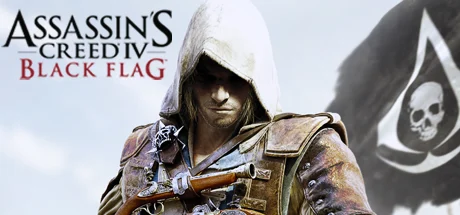 83% match
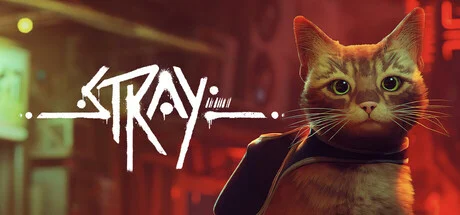 82% match
 81% match
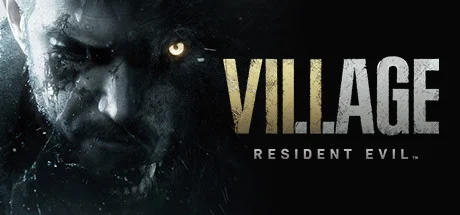 80% match
 80% match
Store details, review counts and requirements come from Steam. Community tag votes come from SteamSpy, and themes and modes from IGDB. Depth and grind scores are produced by two separate language models reading that material, then reconciled and capped against community tags. A score the two models disagree on is marked low confidence.