Melee Combat: depth 9 of 10, grind 3 of 10.
Players engage in methodical third-person melee combat utilizing various weapons, shields, and timed dodges.
Games > DARK SOULS™ II: Scholar of the First Sin
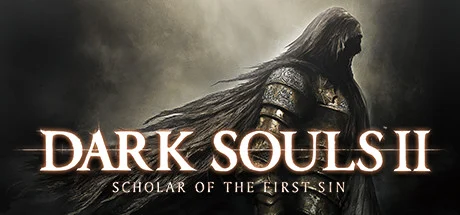 Now scanning App #335300
Dark Souls II: Scholar of the First Sin is a challenging third-person action RPG focused on methodical melee combat, harsh enemy encounters, and deep character builds. Players explore a dark, melancholic fantasy world while managing stamina, upgrades, and demanding boss fights.
Tell the Lab which mechanics you love and which you avoid. This box then makes a Play or Dodge call for you on every game.
Players engage in methodical third-person melee combat utilizing various weapons, shields, and timed dodges.
The game features numerous challenging boss fights scattered throughout different regions of the world.
The game demands precise timing, careful stamina management, and mastery of enemy attack patterns.
Extensive character building is available through stats like adaptability, equipment selection, and leveling.
A wide variety of weapons, armor, rings, and consumable items are discovered or dropped by enemies.
Lore and background narratives are conveyed implicitly through item descriptions, architecture, and scenery.
A deep, cryptic backstory involving cycles, curses, and kingdoms is uncovered throughout the journey.
The game maintains a dark, oppressive, and melancholic atmosphere with spooky encounters and ambushes.
Characters can cast spells, throw projectiles, and use ranged weapons alongside melee equipment.
A melancholic narrative unfolds as the player seeks a cure for the curse in the kingdom of Drangleic.
Invasions and dedicated multiplayer covenants allow players to fight against one another.
Players can summon other players or join cooperative sessions to tackle areas and bosses together.
Players explore a vast interconnected dark fantasy world starting from a central hub area.
Progress is often gated by keys, boss defeats, or environmental obstacles requiring backtracking.
NPCs offer branching dialogue options and give quests or items based on interactions.
Players can sneak around certain enemies or use environmental cover to avoid direct confrontations.
Progression relies on leveling up individual attributes with souls gathered from enemies.
NPC summons can occasionally be called upon to help during specific boss battles or areas.
Certain environmental objects like windmills can be interacted with to alter boss arena conditions.
Players occasionally solve minor environmental puzzles, such as burning a metal windmill to drain poison.
Basic jumping and dropping down ledges are required for navigating certain terrain and secrets.
Enemies actively pressure the player and prevent careless running, though timers are absent.
The overarching journey concludes with a choice leading to different ending cinematic outcomes.
Players communicate using gestural emotes and preset phrases in multiplayer sessions.
The PC release supports community-made visual tweaks and modifications.
Players collect souls, consumable healing lifegems, and upgrade materials while exploring.
Equipment can be upgraded and reinforced at blacksmiths using collected materials.
Players can buy and sell items with merchant NPCs found in hubs.
Death results in dropping carried souls and taking on a hollowed state, requiring retrieval to recover losses.
DARK SOULS™ II: Scholar of the First Sin is built around melee combat (9/10), boss encounters (9/10) and precision & skill difficulty (9/10). It asks for little grind: its systems average 3/10. If you liked DARK SOULS™ III and DARK SOULS™: REMASTERED, it plays close (92% match on mechanics). It has no gunplay, sandbox creativity and driving & handling.
Its deepest systems are melee combat (9/10), boss encounters (9/10) and precision & skill difficulty (9/10).
Play DARK SOULS™ II: Scholar of the First Sin if you want deep melee combat (9/10); you want deep boss encounters (9/10); or you want depth without much grind (its heaviest system asks 6/10).
Skip DARK SOULS™ II: Scholar of the First Sin if you want gunplay: it has none; you want sandbox creativity: it has none; or you want driving & handling: it has none.
Moderately. The most repetitive part is precision & skill difficulty, at 6/10 for grind.
It has no gunplay, sandbox creativity, driving & handling, base building, vehicle combat and procedural generation. It only touches on resource gathering (2/10), mod ecosystem (2/10), economy & trading (1/10), time pressure (2/10), crafting (1/10) and party & companions (2/10).
By shared mechanics rather than genre, the closest matches are DARK SOULS™ III (92% match), DARK SOULS™: REMASTERED (91% match) and ELDEN RING (90% match).
Steam lists these modes: Single-player, Multi-player and Co-op.
The minimum listed on Steam is: Processor: AMD® A8 3870 3,6 Ghz or Intel® Core ™ i3 2100 3.1Ghz; Memory: 4 GB RAM; Graphics: NVIDIA® GeForce GTX 465 / ATI Radeon TM HD 6870; Storage: 23 GB available space.
It is listed at $39.99 on the US Steam store, checked 22 November 2026.
No takes yet. Be the first.
Also checkKinguin
Lowest ever seen: $6.99 Price data from IsThereAnyDeal. Prices change often; the store page has the final one.
 92% match
 91% match
 90% match
 84% match
 84% match
 84% match
 83% match
 83% match
Store details, review counts and requirements come from Steam. Community tag votes come from SteamSpy, and themes and modes from IGDB. Depth and grind scores are produced by two separate language models reading that material, then reconciled and capped against community tags. A score the two models disagree on is marked low confidence.