Build Customization: depth 9 of 10, grind 6 of 10.
Vast build variety and item augments let players tailor characters extensively.
Games > Grim Dawn
 Now scanning App #219990
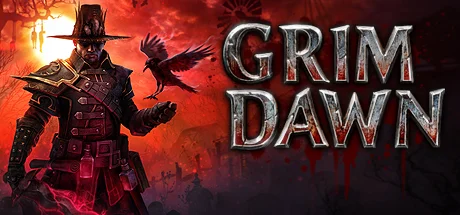
Grim Dawn plays as a dark fantasy ARPG with deep character building and loot‑driven combat. It offers extensive customization, co‑op play, and a sprawling world to explore.
Tell the Lab which mechanics you love and which you avoid. This box then makes a Play or Dodge call for you on every game.
Vast build variety and item augments let players tailor characters extensively.
Game throws abundant loot early and relies on random gear drops for power.
Combat is hack‑and‑slash focused with melee attacks and skill combos.
Dual-class system and devotion UI let players allocate many skills and respec cheaply.
Bosses have massive health pools and can one‑shot players without proper gear.
Players can build spell-casting characters utilizing ranged magical attacks from classes like the Inquisitor or Demolitionist.
Endgame bosses and recent updates demand precise timing with dodge mechanics and damage mitigation.
Online and LAN co-op allow groups of players to journey through the campaign together.
Extensive background lore is detailed through item descriptions, notes, and world history.
Crafting and component systems are used to create and improve equipment.
The game supports community modifications and custom tools distributed via platforms like Steam.
The bleak apocalyptic world conveys its dark fantasy lore through ruins, notes, and atmospheric design.
The post-apocalyptic dark fantasy setting maintains a tense, grim atmosphere of impending extinction.
The campaign follows humanity's last stand against extinction through an extensive questline.
Ranged firearms like pistols and rifles are usable alongside melee attacks.
Levels feature backtracking and large maps encouraging exploration.
Quests feature branching narrative options with choice and consequence during conversations.
Quests allow players to make faction and moral choices that alter world states and outcomes.
Players trade currency, items, and crafting components with vendors throughout the dark fantasy world.
Players collect raw materials and components dropped by enemies or found in the world for crafting.
Puzzle solving is limited to basic key-and-door progression or simple quest switches.
Platforming is non-existent, though a recently added dodge roll is used for tactical combat movement.
A level editor is included for custom content creation, but standard gameplay is goal-oriented.
Stealth elements are minimal, functioning only as slight positional advantages before engaging groups.
Summoned pets or temporary allies accompany the player, but full party companion management is minimal.
Environmental interactions are limited to breaking minor objects and predetermined quest paths.
Players experience minor experience penalties upon death unless playing on hardcore mode.
Multiplayer features allow basic communication and cooperative play without deep social roleplay systems.
Certain dungeon layouts and loot drops feature randomized elements alongside handcrafted overworld maps.
Maps feature interconnected zones with blocked doors and paths that require exploration to open.
Pacing is controlled by the player without strict real-time mission timers affecting progress.
Grim Dawn delivers a classic dark fantasy action role-playing experience built around intensive systems. The character progression stands out with a depth score of 9, utilizing a dual-class system and devotion constellations that offer massive build variety. Loot and itemization also hit a depth of 9, throwing abundant gear at you while tying your long-term power directly to random drops. Alongside these, the melee combat system rates an 8 in depth with hack-and-slash mechanics and skill combos. You will encounter a grind that sits at 8 for loot and itemization, meaning you must commit to repetitive drops and bosses with massive health pools. If you dislike sorting through endless gear and grinding for specific components to survive endgame encounters, you will bounce off this title quickly.
Its deepest systems are build customization (9/10), loot & itemization (9/10) and melee combat (8/10).
Play Grim Dawn if you want dual-class build trees with huge depth; you enjoy hunting random loot drops for power; or you need cooperative play through a dark world.
Skip Grim Dawn if you hate heavy item grinds and random drops; you dislike bosses that require exact gear setups; or you avoid slow inventory management tasks.
Yes, in places. Loot & Itemization scores 8/10 for grind, the highest in the game.
It has no competitive PvP, driving & handling, base building, vehicle combat, survival needs and colony & NPC management. It only touches on resource gathering (2/10), time pressure (1/10), sandbox creativity (2/10), stealth (1/10), party & companions (1/10) and platforming (2/10).
By shared mechanics rather than genre, the closest matches are Last Epoch (90% match), Path of Exile (87% match) and Path of Exile 2 (84% match).
Steam lists these modes: Single-player, Multi-player, Co-op, Online Co-op and LAN Co-op.
The minimum listed on Steam is: Processor: x86 compatible 2.3GHz or faster processor (Intel 2nd generation core i-series or equivalent); Memory: 2 GB RAM; Graphics: 512MB NVIDIA GeForce 6800 series or ATI Radeon X800 series or better; Storage: 5 GB available space.
It is listed at $24.99 on the US Steam store, checked 19 November 2026.
No takes yet. Be the first.
Also checkKinguin
Lowest ever seen: $2.49 Price data from IsThereAnyDeal. Prices change often; the store page has the final one.
 90% match
 87% match
 84% match
 84% match
 84% match
 84% match
 83% match
 83% match
Store details, review counts and requirements come from Steam. Community tag votes come from SteamSpy, and themes and modes from IGDB. Depth and grind scores are produced by two separate language models reading that material, then reconciled and capped against community tags. A score the two models disagree on is marked low confidence.