Build Customization: depth 10 of 10, grind 9 of 10.
Players craft unique characters using a massive passive skill tree and diverse skill gems.
Games > Path of Exile
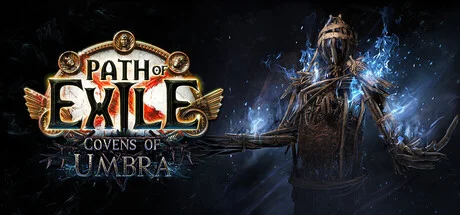 Now scanning App #238960
Path of Exile is a fast‑paced action RPG focused on building powerful characters through extensive skill trees and loot hunting. It blends solo and co‑op play with competitive PvP options.
Tell the Lab which mechanics you love and which you avoid. This box then makes a Play or Dodge call for you on every game.
Players craft unique characters using a massive passive skill tree and diverse skill gems.
The passive skill tree offers thousands of nodes shaping character power.
Combat yields abundant random loot, with rarity tiers and item filters.
Combat centers on melee attacks and combos against hordes of monsters.
Spellcasting provides primary ranged damage and crowd control.
Extensive lore is hidden in quests, items, and NPC dialogues.
High skill ceiling demands precise timing and positioning in fast combat.
Each map is procedurally generated, offering new layouts each playthrough.
Players face challenging endgame bosses throughout various league mechanics and atlas maps.
Currency items let players modify equipment, adding or changing stats.
A complex player-driven trade market and item currency system dictate gear acquisition and high-end progression.
A loose narrative ties together the exile’s quest for revenge.
PvP arenas allow players to duel using their builds.
Players collect loot and currency by killing monsters and opening chests.
Large randomly generated maps encourage exploration beyond linear paths.
The game supports online co‑op, letting parties tackle maps together.
Lore is conveyed through item descriptions and environmental details.
Mercenary NPCs can be hired to fight alongside the player.
NPCs offer limited dialogue options with minimal impact.
Timed events are rare, mostly during league races.
Character builds offer deep customization of skills and gear.
Chat and emotes enable limited role‑play among players.
Ranged magic or projectile attacks exist, but dedicated firearm combat is absent.
Some skills grant temporary invisibility for brief stealth.
Multiple skill combos can solve encounters, though options are limited.
Waypoints and act progression open up new zones sequentially.
Occasional jump challenges appear in certain areas.
Story branches are minimal, with few alternate endings.
League formats and temporary event characters encourage starting over in fresh economies.
Optional hardcore leagues feature permanent death for characters.
Quest puzzles require simple lever or key interactions.
Community creates cosmetic and UI mods for the game.
Dark atmospheres and occasional jump scares create tension.
Path of Exile is an action role-playing game built around massive scale and continuous loot collection. You will spend most of your time navigating a massive passive skill tree with a depth score of 10, alongside complex build customization sitting at a depth of 10. Loot and itemization also reach a depth of 9, driving every combat encounter. However, the grind sits firmly at 9, demanding extensive repetition to acquire currency and gear for high-end progression. You will bounce off this experience if you dislike heavy resource grinding or complex spreadsheet-level planning. The fast-paced combat requires precise positioning, but the true barrier is the sheer volume of mandatory repetition needed to reach endgame bosses and master the player-driven economy.
Its deepest systems are build customization (10/10), skill trees & progression (10/10) and loot & itemization (9/10).
Play Path of Exile if you want deep build customization options; you enjoy complex loot and itemization; or you like procedural map generation.
Skip Path of Exile if you dislike heavy repetitive grinding; you want a simple casual progression; or you avoid complex economic trading.
Yes, in places. Build Customization scores 9/10 for grind, the highest in the game.
It has no base building, driving & handling, vehicle combat, survival needs, colony & NPC management and turn-based tactics. It only touches on gunplay (1/10), mod ecosystem (1/10), time pressure (2/10), horror & tension (1/10), sandbox creativity (2/10) and party & companions (2/10).
By shared mechanics rather than genre, the closest matches are Path of Exile 2 (90% match), Last Epoch (88% match) and Grim Dawn (87% match).
Steam lists these modes: Single-player, Multi-player, PvP, Online PvP and Co-op.
The minimum listed on Steam is: Processor: Quad core 2.6GHz x86-compatible; Memory: 8 GB RAM; Graphics: NVIDIA® GeForce® GTX 650 Ti or ATI Radeon™ HD 7850; Storage: 40 GB available space.
Yes. It is free to play on Steam.
No takes yet. Be the first.
Also checkKinguin
Lowest ever seen: $9.00 Price data from IsThereAnyDeal. Prices change often; the store page has the final one.
 90% match
 88% match
 87% match
 82% match
 82% match
 81% match
 80% match
 79% match
Store details, review counts and requirements come from Steam. Community tag votes come from SteamSpy, and themes and modes from IGDB. Depth and grind scores are produced by two separate language models reading that material, then reconciled and capped against community tags. A score the two models disagree on is marked low confidence.