Base Building: depth 9 of 10, grind 5 of 10.
Organic medieval village construction allows detailed placement of homes, extensions, and castles.
Games > Manor Lords
 Now scanning App #1363080
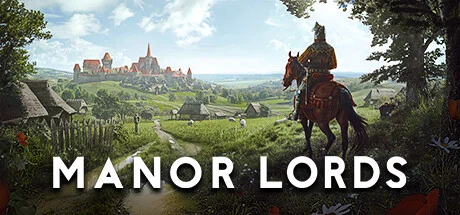
Manor Lords combines medieval city-building and economic simulation with large-scale tactical militia battles. Players develop organic settlements, manage resource supply chains, and expand across territories while dealing with seasonal changes.
Tell the Lab which mechanics you love and which you avoid. This box then makes a Play or Dodge call for you on every game.
Organic medieval village construction allows detailed placement of homes, extensions, and castles.
Players construct organic medieval settlements, manage varying housing tiers, zone plots, and handle resource chains.
Peasants gather local resources, manage complex farming cycles, crop rotation, and exploit mining nodes.
Players engage in large-scale tactical battles by equipping peasant militias with crafted weapons and armor to face rival forces.
Economy management relies on establishing trade routes, acquiring new territories, and managing regional resource distribution.
Players manage crop rotation, plowing fields, and vegetable gardens while dealing with difficult farming AI.
Citizens act as both workers and militia members, requiring task allocation, housing, and careful oversight of their AI pathfinding.
Road placement tools allow players to lay out organic-looking medieval settlements with customized vegetable gardens and orchards.
Peasants craft advanced armor, weapons, and tools needed to equip local militias for combat.
Townspeople require adequate food, clothing, and firewood to survive the changing seasons and weather.
A development point tree offers specializations and perks to advance settlement capabilities.
Players explore separate regional maps with randomized resources, fertile lands, and expansion zones.
Seasons pass and weather changes dynamically, imposing time constraints on winter preparations.
The game has community tags indicating moddability, though formal support is early.
Players command peasant militias in tactical medieval battles where armed units clash in real-time.
Players select development points and origins cards to guide their town's specialization paths.
Atmospheric visuals create a realistic sense of living in a medieval historical setting.
Historical accuracy sets the scene without a complex overarching fictional lore.
Road network tricks and plot layouts require mild spatial planning to look organic.
The game lacks a narrative campaign, focusing purely on sandbox lord simulation.
Militia units equip various tiers of armor and weapons like gambesons and plate.
Villagers react organically to road layouts and nearby workplace assignments.
Difficulty can be adjusted, though tactical management requires strategic planning.
Players roleplay as a medieval lord, following individual citizens around their tasks.
Manor Lords is defined by its complex Base Building at depth 9 and City Management at depth 9, which require you to lay out organic medieval villages, manage housing tiers, and balance resource chains. Alongside these, Resource Gathering sits at depth 7, forcing you to navigate farming cycles and mining nodes. The grind for resource gathering and city management sits at a moderate 6 out of 10, meaning you will spend considerable time managing supply lines and seasonal winter preparations. You will bounce off this experience if you expect fast-paced real-time strategy combat or automated logistics, as tactical battles and crafting take secondary roles to the deliberate pacing of regional expansion.
Its deepest systems are base building (9/10), city management (9/10) and resource gathering (7/10).
Play Manor Lords if you want organic medieval village construction; you enjoy managing complex farming and supply chains; or you like balancing seasonal survival needs.
Skip Manor Lords if you dislike heavy resource gathering grind; you expect fast real-time strategy battles; or you want automated logistics systems.
Moderately. The most repetitive part is city management, at 6/10 for grind.
It has no boss encounters, co-op PvE, gunplay, competitive PvP, horror & tension and party & companions. It only touches on precision & skill difficulty (1/10), environmental storytelling (2/10), story-driven (1/10), lore depth (2/10), loot & itemization (1/10) and puzzle solving (1/10).
By shared mechanics rather than genre, the closest matches are Schedule I (81% match), Cities: Skylines II (78% match) and Fallout Shelter (77% match).
Steam lists these modes: Single-player.
The minimum listed on Steam is: Processor: Intel® Core™ i5-4670 (quad-core) / AMD® FX-Series™ FX-4350 (quad-core); Memory: 8 GB RAM; Graphics: NVIDIA® GeForce® GTX 1050 (2 GB) / AMD® Radeon™ RX-460 (4 GB) / Intel® Arc™ A380 (6 GB); Storage: 15 GB available space.
It is listed at $39.99 on the US Steam store, checked 19 November 2026.
No takes yet. Be the first.
Also checkKinguin
Lowest ever seen: $19.79 Price data from IsThereAnyDeal. Prices change often; the store page has the final one.
 81% match
 78% match
 77% match
 76% match
 75% match
 74% match
 74% match
 74% match
Store details, review counts and requirements come from Steam. Community tag votes come from SteamSpy, and themes and modes from IGDB. Depth and grind scores are produced by two separate language models reading that material, then reconciled and capped against community tags. A score the two models disagree on is marked low confidence.