Melee Combat: depth 8 of 10, grind 3 of 10.
The game features combo‑heavy melee combat with parries and counters.
Games > Middle-earth™: Shadow of Mordor™
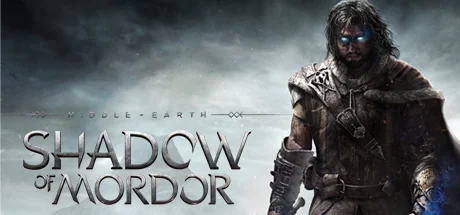 Now scanning App #241930
Players traverse an open‑world Mordor, mixing melee attacks, stealth and limited magic while upgrading abilities. Progression is driven by loot, skill trees and boss encounters.
Tell the Lab which mechanics you love and which you avoid. This box then makes a Play or Dodge call for you on every game.
The game features combo‑heavy melee combat with parries and counters.
Players can perform stealth takedowns and avoid detection.
Character growth uses a branching skill‑tree system.
Major story bosses present distinct combat challenges.
A sprawling Mordor landscape is freely explored.
Combat relies on timing, counters, and executing combos against groups of enemies.
The Nemesis system procedurally generates unique Orc captains and ranks.
Combat capabilities are customized and expanded through unlocking various abilities and rune upgrades.
A central narrative campaign drives the player forward to uncover the truth behind a mysterious spirit.
The narrative and world are deeply tied to discovering origins and background lore of Middle-earth.
The grim open world of Mordor showcases ruined structures and environmental details.
Enemies drop varied weapons and gear to equip.
Traversal involves parkour elements for climbing structures and navigating the environment quickly.
Wraith abilities allow for ranged magical pinning and stun attacks.
Enemies react dynamically to player actions, remembering past defeats and rivalries.
Orc captains can be manipulated and branded via the Nemesis system.
Dark fantasy aesthetics provide a gloomy, tense atmosphere.
Ranged archery attacks are available with the bow and arrow.
Rune upgrades can be collected and equipped on weapons.
Players collect herbs and collectibles scattered around the world.
Occasional narrative interactions occur during cutscenes.
Fast travel points are unlocked by scaling towers across the zones.
Fluid melee combat relies on a rhythmic flow of strikes and counters.
The campaign follows a fixed path with minimal story branching.
Open world freedom allows players to hunt captains and explore camps at leisure.
Player death resets positioning and strengthens the specific Orc who landed the killing blow.
Light environmental puzzle elements involve unlocking towers and collecting artifacts.
Certain missions or dynamic events feature loose in-game time expectations.
Players roleplay as a Ranger bound to a Wraith.
PC versions support basic user-generated adjustments.
Players can mount and ride certain beast creatures across the terrain.
Middle-earth: Shadow of Mordor relies on combo-heavy Melee Combat at depth 8 and Stealth at depth 7 to shape its open-world action. You traverse a sprawling Mordor landscape while interacting with the procedural Nemesis system, which generates unique Orc captains and ranks. Progression ties directly into a branching skill tree and varied equipment drops, sitting at a moderate grind of 4. You will bounce off this experience if you dislike fighting groups of enemies using strict timing and counters, or if you prefer deep role-playing choices over straightforward action campaigns.
Its deepest systems are melee combat (8/10), stealth (7/10) and skill trees & progression (6/10).
Play Middle-earth™: Shadow of Mordor™ if you enjoy combo-heavy melee combat with parries; you want procedurally generated rival captains; or you like clearing out stealth-based outposts.
Skip Middle-earth™: Shadow of Mordor™ if you dislike repetitive enemy encounters and loot; you want deep dialogue and role-playing choices; or you prefer structured turn-based tactical play.
Moderately. The most repetitive part is skill trees & progression, at 4/10 for grind.
It has no co-op PvE, competitive PvP, economy & trading, party & companions, base building and vehicle combat. It only touches on gunplay (2/10), resource gathering (2/10), mod ecosystem (1/10), time pressure (1/10), crafting (2/10) and sandbox creativity (2/10).
By shared mechanics rather than genre, the closest matches are Middle-earth™: Shadow of War™ (90% match), Marvel's Spider-Man 2 (88% match) and Black Myth: Wukong (86% match).
Steam lists these modes: Single-player.
The minimum listed on Steam is: Processor: Intel Core i5-750, 2.67 GHz | AMD Phenom II X4 965, 3.4 GHz; Memory: 3 GB RAM; Graphics: NVIDIA GeForce GTX 460 | AMD Radeon HD 5850; Storage: 44 GB available space.
It is listed at $19.99 on the US Steam store, checked 19 November 2026.
No takes yet. Be the first.
Also checkKinguin
Prices change often; the store page has the final one.
 90% match
 88% match
 86% match
 85% match
 84% match
 83% match
 83% match
 83% match
Store details, review counts and requirements come from Steam. Community tag votes come from SteamSpy, and themes and modes from IGDB. Depth and grind scores are produced by two separate language models reading that material, then reconciled and capped against community tags. A score the two models disagree on is marked low confidence.