Story-Driven: depth 9 of 10, grind 1 of 10.
The narrative focuses heavily on the emotional relationship and growth between Kratos and his son.
Games > God of War
 Now scanning App #1593500
God of War is a story-driven action-adventure game that blends visceral melee combat with a deeply personal narrative about a father and son. Players explore semi-open Norse realms, solve environmental puzzles, and engage in epic encounters alongside an active companion.
Tell the Lab which mechanics you love and which you avoid. This box then makes a Play or Dodge call for you on every game.
The narrative focuses heavily on the emotional relationship and growth between Kratos and his son.
Combat features weighty melee action centered around recalling a magical axe and unlocking various skill upgrades.
The adventure features epic, high-stakes boss fights embedded throughout the journey.
Stats and abilities are customized through gear sets, enchantments, and talisman choices.
Players can invest in various skill upgrades and armor sets for both Kratos and Atreus.
Atreus acts as an active combat and narrative partner who assists throughout the journey.
The game utilizes a wide-linear semi-open world structure with optional side content and collectibles.
Lore markers, environmental details, and boat tales flesh out the Norse mythological world.
Combat demands precise dodging, blocking with a shield, and timing counter-attacks on higher difficulties.
Loot consists of various armor pieces, pommels, and enchantments with distinct statistical bonuses.
Semi-open hubs open up new paths and return access as tools and realm travel unlock.
Environmental puzzles require throwing the axe at targets, spinning mechanisms, or ringing bells.
The world is deeply enriched by detailed lore and background stories rooted in Norse and Greek mythology.
Players gather materials to forge and upgrade armor and weapons at dwarf workshops.
Exploration involves collecting scattered loot, hacksilver, and crafting components across realms.
Traversal involves climbing ledges, jumping across gaps, and swinging on ropes.
Ranged combat is handled primarily by throwing the magical Leviathan axe and having son Atreus shoot arrows.
Dwarven merchants allow buying and selling of gear and upgrade materials using hacksilver.
Conversations feature fixed character interactions without branching dialogue trees.
Environments feature light interactive elements like axe-locked mechanisms or rune puzzles.
Certain timed realm tear encounters or puzzle elements require quick inputs.
Some realms and enemy encounters feature dark, tense atmospheres.
The narrative follows a singular cinematic path without alternate story routes.
Occasional brief stealth mechanics or stealth takedowns are possible, but not a primary focus.
PC release supports community-made visual or cosmetic mods.
God of War anchors its experience on Story-Driven depth 9 and Melee Combat depth 8, delivering a focused narrative about a father and son alongside weighty encounters centered on a magical axe. Build Customization depth 6 and Open-World Exploration depth 6 support the journey with gear management and semi-open Norse realms, while the grind sits at a manageable level 2 to 3 across these systems. You will bounce off this action-adventure if you prefer open-ended sandbox creativity, real-time strategy, or deep survival needs, as the game keeps you on a structured, narrative-focused path through its mythological settings without automation or complex crafting loops.
Its deepest systems are story-driven (9/10), melee combat (8/10) and boss encounters (7/10).
Play God of War if you want a heavy narrative focused on a father and son; you enjoy visceral melee combat with a magical axe; or you like exploring semi-open realms with puzzles.
Skip God of War if you dislike linear story-driven action games; you want deep base building and survival needs; or you expect procedural generation and sandbox play.
Not much. Its highest grind score is 3/10, for melee combat.
It has no co-op PvE, gunplay, competitive PvP, sandbox creativity, base building and driving & handling. It only touches on mod ecosystem (1/10), economy & trading (2/10), time pressure (2/10), horror & tension (2/10), stealth (1/10) and magic & ranged abilities (2/10).
By shared mechanics rather than genre, the closest matches are FINAL FANTASY VII REBIRTH (88% match), Black Myth: Wukong (87% match) and Marvel's Spider-Man 2 (87% match).
Steam lists these modes: Single-player.
The minimum listed on Steam is: Processor: Intel i5-2500k (4 core 3.3 GHz) or AMD Ryzen 3 1200 (4 core 3.1 GHz); Memory: 8 GB RAM; Graphics: NVIDIA GTX 960 (4 GB) or AMD R9 290X (4 GB); Storage: 70 GB available space.
It is listed at $49.99 on the US Steam store, checked 19 November 2026.
No takes yet. Be the first.
Also checkKinguin
Lowest ever seen: $6.83 Price data from IsThereAnyDeal. Prices change often; the store page has the final one.
 88% match
 87% match
 87% match
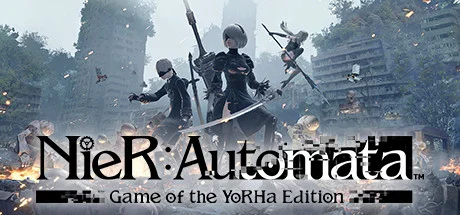 85% match
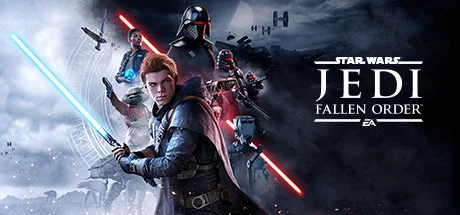 85% match
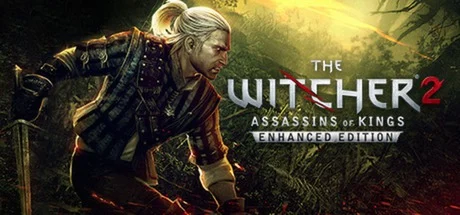 84% match
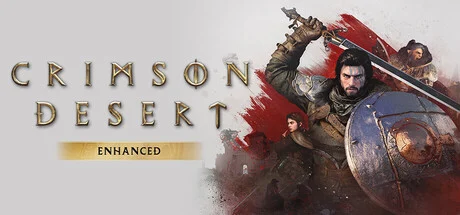 84% match
 84% match
Store details, review counts and requirements come from Steam. Community tag votes come from SteamSpy, and themes and modes from IGDB. Depth and grind scores are produced by two separate language models reading that material, then reconciled and capped against community tags. A score the two models disagree on is marked low confidence.