Story-Driven: depth 9 of 10, grind 2 of 10.
The main narrative follows Geralt's quest to find Ciri, driving gameplay.
Games > The Witcher 3: Wild Hunt — Remastered
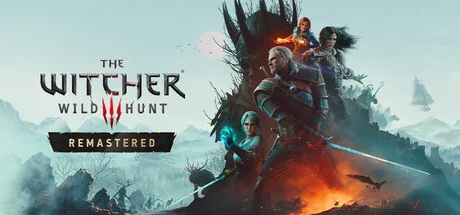 Now scanning App #292030
The Witcher 3 blends deep combat, magic, and extensive crafting within a sprawling open world. Narrative choices and a rich story keep the experience engaging.
Tell the Lab which mechanics you love and which you avoid. This box then makes a Play or Dodge call for you on every game.
The main narrative follows Geralt's quest to find Ciri, driving gameplay.
The dark fantasy world is filled with visual details, notes, and environmental clues telling tragic stories.
A vast open world with diverse regions encourages free exploration.
The game features multiple endings and decisions where even small choices matter significantly.
Deep world-building and detailed character histories create an immersive dark fantasy setting.
Players gather ingredients to brew potions, oils, and craft gear at workbenches.
Players build distinct combat styles by investing in skill trees, equipping mutagens, and preparing oils.
Combat involves sword attacks, dodges, and parries against monsters and humans.
Conversation options affect story outcomes and character relationships.
Players face major scripted monster and humanoid boss fights throughout the main quests and expansions.
Combat requires timed parries, dodging, and preparation on higher difficulty settings.
Experience points unlock skill trees for combat, signs, and alchemy.
Geralt uses magical signs like Igni and Aard to damage or control foes.
Defeating enemies yields varied weapons, armor, and loot with distinct stats.
Fleshed-out companions like Yennefer and Triss feature meaningful interactions and romance options.
Herbs, monster parts, and ores are collected throughout the world for alchemy and upgrades.
Quests and dialogue often offer multiple paths and reactive consequences affecting the world state.
Geralt sells loot and buys materials from various merchants across towns and settlements.
The in-game collectible card game Gwent features deck building and strategic matches against NPCs.
Geralt can sneak at a slow pace to bypass some enemies or execute surprise attacks.
Mounted combat on horseback is occasionally utilized against enemies while exploring the open world.
Consumables and potions can replenish health and provide buffs, but strict survival meters are absent.
Geralt can climb ledges and jump across gaps during exploration.
Certain quests feature soft narrative timers or urgency, but standard gameplay is not rushed.
The open world allows free roaming, though environmental manipulation is strictly limited.
Certain map areas and treasures require specific upgrades or progression milestones to access.
Witcher senses are used to investigate crime scenes and follow tracks to solve minor navigation puzzles.
Players can use emotes and interact with characters to roleplay Geralt's personality.
The player can ride a horse for transportation across the open world.
The Witcher 3: Wild Hunt — Remastered centers on a story-driven narrative with a depth of 9 and minimal grind at 2, shaping the core dark fantasy journey. You will spend much of your time navigating an open-world exploration system scoring a depth of 8 and a grind of 3, alongside crafting mechanics sitting at a depth of 6 and a moderate grind of 5 for gathering ingredients and brewing oils. Combat relies on melee mechanics and build customization, both holding a depth of 6 and a grind of 4, requiring you to prepare properly before major fights. If you dislike heavy resource gathering sitting at a grind of 6 or prefer games without extensive dialogue choices, you will likely bounce off this sprawling adventure.
Its deepest systems are story-driven (9/10), environmental storytelling (8/10) and open-world exploration (8/10).
Play The Witcher 3: Wild Hunt — Remastered if you want a story-driven quest that shapes your path; you enjoy open-world exploration across diverse regions; or you like crafting gear and brewing potions for combat.
Skip The Witcher 3: Wild Hunt — Remastered if you dislike gathering herbs and monster parts for upgrades; you want fast action without heavy dialogue choices; or you prefer minimal gear management and loot grinding.
Moderately. The most repetitive part is resource gathering, at 6/10 for grind.
It has no co-op PvE, competitive PvP, base building, procedural generation, colony & NPC management and roguelike runs. It only touches on time pressure (1/10), sandbox creativity (1/10), stealth (2/10), platforming (1/10), puzzle solving (1/10) and driving & handling (1/10).
By shared mechanics rather than genre, the closest matches are Assassin's Creed® Odyssey (89% match), Horizon Zero Dawn™ Complete Edition (88% match) and The Witcher 2: Assassins of Kings Enhanced Edition (87% match).
Steam lists these modes: Single-player.
The minimum listed on Steam is: Processor: Core i5-8400 / Ryzen 5 2600; Memory: 12 GB RAM; Graphics: GeForce GTX 1660 / Radeon RX 5500 XT 8GB / Arc A580; Storage: 60 SSD GB available space.
It is listed at $49.99 on the US Steam store, checked 15 November 2026.
No takes yet. Be the first.
Also checkKinguin
Lowest ever seen: $3.99 Price data from IsThereAnyDeal. Prices change often; the store page has the final one.
 89% match
 88% match
 87% match
 86% match
 85% match
 85% match
 85% match
 84% match
All games like The Witcher 3: Wild Hunt — Remastered
Store details, review counts and requirements come from Steam. Community tag votes come from SteamSpy, and themes and modes from IGDB. Depth and grind scores are produced by two separate language models reading that material, then reconciled and capped against community tags. A score the two models disagree on is marked low confidence.