Story-Driven: depth 9 of 10, grind 1 of 10.
An unforgettable plot focuses heavily on memorable characters, humor, and deep emotional themes.
Games > Undertale
 Now scanning App #391540
Undertale is a critically acclaimed indie RPG where players navigate quirky monster encounters through unique dialogue and bullet-hell dodging mechanics. It delivers a deeply emotional, choice-driven story backed by an iconic soundtrack and memorable characters.
Tell the Lab which mechanics you love and which you avoid. This box then makes a Play or Dodge call for you on every game.
An unforgettable plot focuses heavily on memorable characters, humor, and deep emotional themes.
Distinct routes and multiple endings emerge based on whether you choose to fight or spare opponents.
Player decisions dictate encounters, character relationships, and the overall trajectory of the narrative.
The world hides layers of secrets and backstory uncovered across multiple playthroughs and routes.
Turn-based encounters incorporate bullet-hell dodging minigames requiring precise physical inputs.
Players face unique boss encounters with distinct bullet-hell attack patterns that require precise dodging and timing.
Combat mixes turn-based menu decisions like acting, item use, and sparing with real-time dodging phases.
Certain routes feature psychological horror elements and unsettling atmospheric shifts.
The game reacts strongly to player choices, altering dialogue, endings, and encounters based on pacifist or violent paths.
Bullet hell combat sequences require dodging incoming attacks in real-time under pressure.
Players traverse distinct interconnected areas and towns in a top-down view.
Combat encounters and enemy attack patterns heavily sync with the iconic soundtrack.
Progress requires navigating environmental puzzles and interactive mechanisms in various rooms.
Players can use basic attacks or weapons against monsters during encounters.
Players can purchase items or equipment using in-game currency.
Found items and weapons provide simple stat boosts.
Certain encounters allow dodging or avoiding enemy attacks without engaging directly.
Players can equip different items and armor pieces to alter stats.
Non-player characters accompany or interact closely with the protagonist throughout the journey.
Occasional jumping or movement challenges appear during navigation.
The community supports various fan-made modifications and translation patches.
Characters use projectile magic or special attacks during combat sequences.
Includes dating sim and light social interaction elements with various characters.
Backtracking through previously visited zones is common to discover secrets and new paths.
Undertale relies on three core pillars to shape its single-player experience: a Story-Driven framework at depth 9, a Branching Narrative at depth 9, and Dialogue Choices sitting at depth 8. Your decisions directly dictate encounters, character relationships, and the overall trajectory of the narrative through distinct routes and multiple endings. Combat mixes turn-based menu decisions with real-time dodging phases, anchored by a Precision and Skill Difficulty of depth 6. Grind across these systems sits very low, ranging from a minimal 1 to 2, meaning you spend your time experiencing the plot rather than repeating tasks. If you dislike retro aesthetics, turn-based mechanics combined with bullet-hell dodging, or narratives that demand multiple playthroughs to uncover hidden layers, you will bounce off this title entirely.
Its deepest systems are story-driven (9/10), branching narrative (9/10) and dialogue choices (8/10).
Play Undertale if you want a story driven plot with deep emotional themes; you like branching narratives based on fighting or sparing; or you enjoy turn based combat mixed with bullet hell dodging.
Skip Undertale if you dislike retro aesthetics and top down exploration; you want open world exploration and resource gathering; or you hate precision skill checks during boss encounters.
Not much. Its highest grind score is 2/10, for branching narrative.
It has no environmental storytelling, skill trees & progression, co-op PvE, gunplay, resource gathering and competitive PvP. It only touches on build customization (1/10), melee combat (2/10), loot & itemization (2/10), mod ecosystem (1/10), economy & trading (2/10) and stealth (1/10).
By shared mechanics rather than genre, the closest matches are The Witcher 2: Assassins of Kings Enhanced Edition (83% match), DELTARUNE (83% match) and OMORI (80% match).
Steam lists these modes: Single-player.
The minimum listed on Steam is: Memory: 2 GB RAM; Graphics: 128MB; Storage: 200 MB available space.
It is listed at $9.99 on the US Steam store, checked 17 November 2026.
No takes yet. Be the first.
Also checkKinguin
Lowest ever seen: $0.99 Price data from IsThereAnyDeal. Prices change often; the store page has the final one.
 83% match
 83% match
 80% match
 78% match
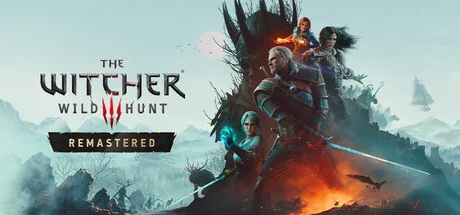 77% match
 76% match
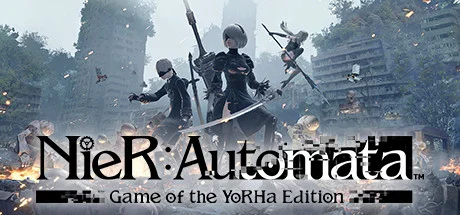 76% match
 76% match
Store details, review counts and requirements come from Steam. Community tag votes come from SteamSpy, and themes and modes from IGDB. Depth and grind scores are produced by two separate language models reading that material, then reconciled and capped against community tags. A score the two models disagree on is marked low confidence.